There's a phrase that gets thrown around a lot in rescue circles, and it took me years to understand what it actually means for a dog living in your house: dog decompression period. The rescue dog first 30 days are not about obedience, leash manners, or Instagram-ready moments. They're about letting a dog's nervous system slowly dial down from survival mode to something softer. It's not a training plan. It's a waiting plan. And if you're new to this, I want to show you what it actually looks like from the inside—not the highlight reel, but the quiet, unglamorous work that happens before the real relationship can start.
When I brought Waffles home, I thought I needed to do everything right. I set up the crate, bought the expensive food, and tried to teach her her name on day two. She hid behind the toilet. I learned the hard way that the first 30 days with a rescue dog are less about what you do and more about what you don't do. The less you push, the faster they often settle. That sounds backwards until you've watched a shut-down dog start to exhale for the first time.
What Decompression Actually Means
Decompression is not just "relaxing." For a shelter dog, it's the process of recalibrating from an environment full of noise, unfamiliar smells, and unpredictable schedules to one where nothing bad happens. The problem is, your new dog doesn't know that yet. They're still expecting the door to slam, the stranger to grab them, the routine to change without warning.
That's why the dog decompression period matters so much. You're not only giving the dog time. You're giving their body time to learn that the danger is over. This takes weeks, not days. Some dogs settle in a few days; others need the full month or longer. Neither timeline means you're doing something wrong.
Week One: Let the Dog Hide
The first seven days are not the time for introductions, car rides, or trips to the pet store. They're the time for safety. I set up a small room—the guest bathroom for Waffles, the spare room for Biscuit—and I leave the dog alone as much as possible. Not ignoring them, but not hovering either.
The Safe Room Setup That Works
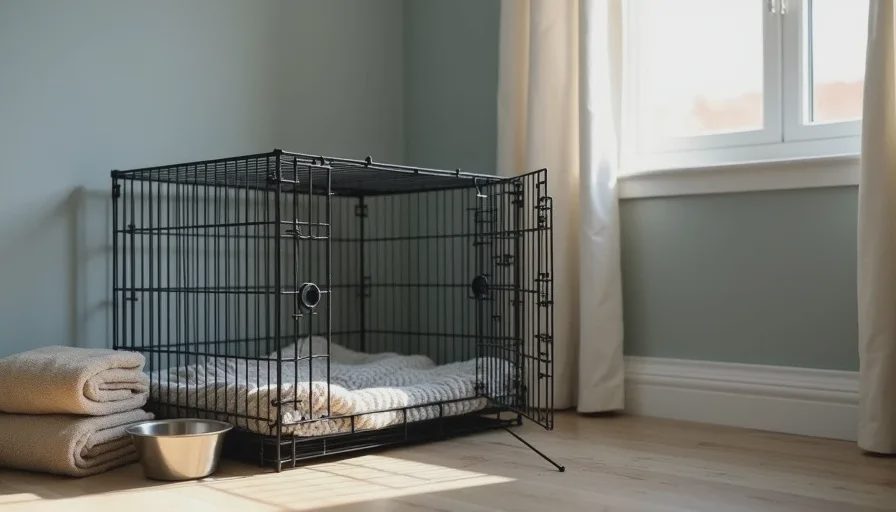
A safe room for a dog doesn't need to be fancy. It needs four things: a comfortable place to lie down, access to water, a predictable place to eliminate if you can't get outside quickly, and quiet. I use a crate with the door open, an old blanket, and a bowl of water. I keep the lights low and the door cracked enough for the dog to hear the house but not be overwhelmed by it.
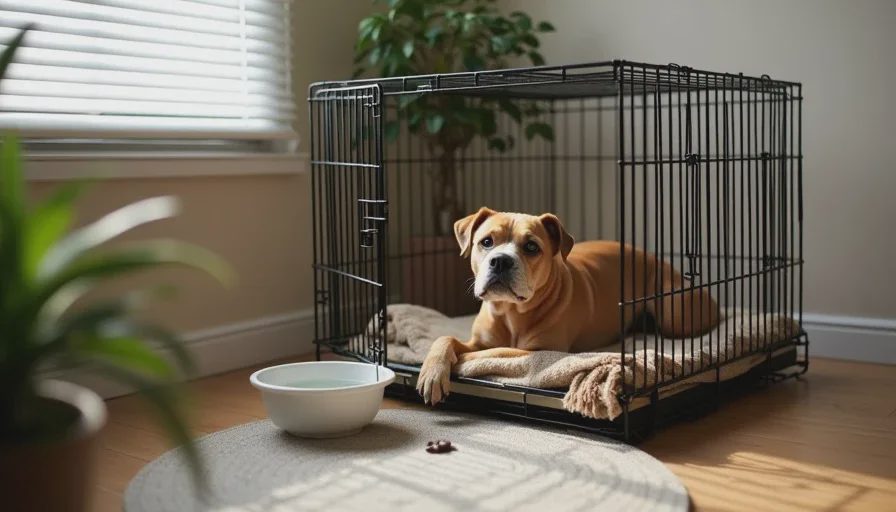
I don't put food in the safe room unless the dog refuses to come out. Instead, I offer food from my hand or just inside the doorway. That small act builds something you can't rush: the dog learning that good things come from you.
The "Ignore and Wait" Method
I know it feels wrong to ignore a dog you've been waiting to love. But the kindest thing you can do in week one is give the dog space to make the first move. I sit on the floor on the other side of the room, maybe read a book, maybe scroll my phone. I don't stare. I don't coo. I just exist nearby. For Waffles, it took five days before she came close enough to sniff my sock. For Biscuit, he walked straight to the dog bed and went to sleep. Each dog sets their own pace, and my job is to match it.
Week Two and Three: Small, Predictable Steps
Once the dog starts moving through the house without bolting, it's tempting to start adding activities. I've learned to add one thing at a time and watch carefully for signs of overload.
Expanding the World Slowly
From the safe room, I open access to one more room—usually the living room or kitchen—if the dog seems ready. I keep a bed or blanket in each space so the dog has a consistent scent anchor. Biscuit followed me from room to room like a slow shadow by day ten. Waffles took almost two weeks before she'd cross from the bathroom into the hallway. Both timelines were correct for those dogs.
The First Walks
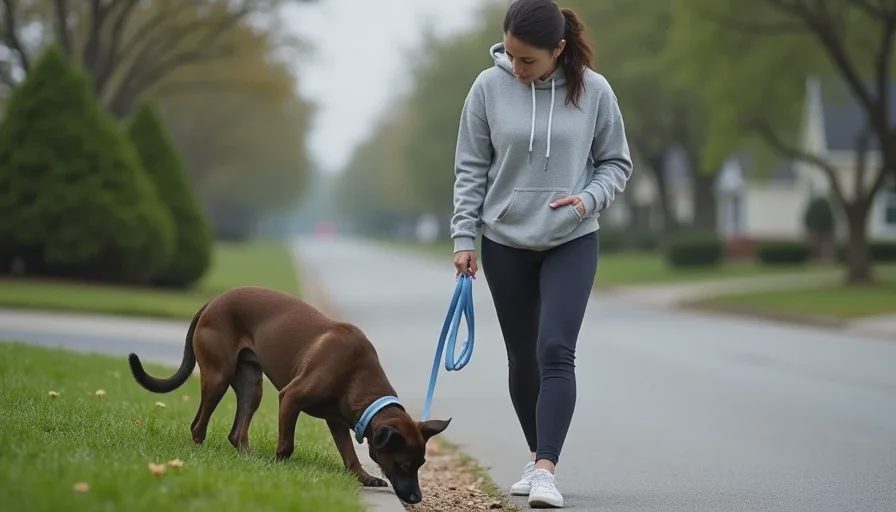
When I do start short walks, I keep them boring. Same route, same time, same calm pace. The world is enormous to a dog coming out of a kennel, and novelty is exhausting. A walk around the block twice a day is plenty for most dogs in the rescue dog first 30 days. I don't stop to meet strangers or other dogs. I don't correct pulling. I just let the dog move and sniff at their own pace, and I bring high-value treats for moments when they check in with me.
Week Four: What Progress Looks Like
By the end of the first month, the signs of decompression are often so small you can miss them if you're not paying attention. Here are the ones I watch for.
The Dog Sleeps Deeply
A dog who sleeps with their belly exposed, or who lets out a deep sigh before closing their eyes, is showing you they feel safe. Shallow, twitchy sleep in a tight ball is common early on. Deep sleep is a milestone.
The Dog Eats Without Fear
Early on, some dogs eat fast or not at all. When a rescue dog starts eating in front of you, at a regular pace, with pauses to look around, that's a huge signal. Food is vulnerable time. If they can eat while you're nearby, they're starting to trust the environment.
The Dog Checks In With You
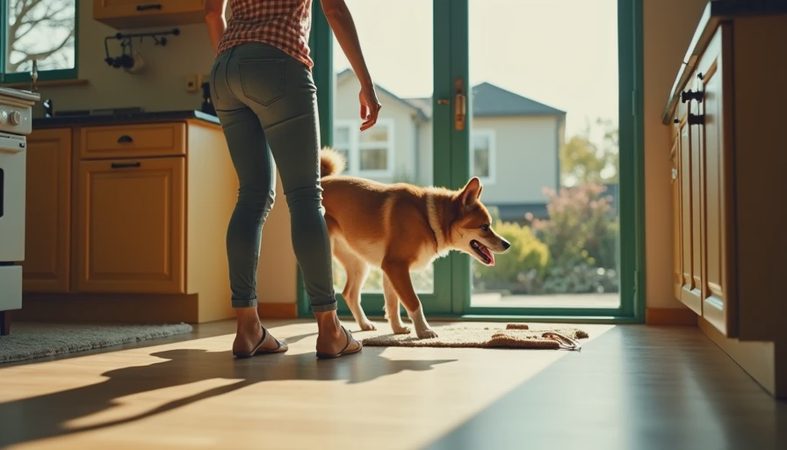
The moment your dog looks back at you during a walk, or walks into the kitchen to see where you are, is the moment the relationship starts to shift. It's not obedience. It's connection. I celebrate that more than any trick.
The "Setbacks" That Aren't Really Setbacks
Around week three, some dogs have a day where they seem more nervous than the day before—startling at a sound, hiding again, refusing to eat. This is normal. Decompression isn't linear. The dog is processing, not regressing. When it happens, I go back to the low-pressure routine for a day or two. It always passes.
What Not to Do in the First 30 Days
I've made plenty of mistakes, and they almost all come from moving too fast.
Don't introduce too many people or animals
The resident pets, the neighbor's dog, the kids, the vet visit—each new introduction is a stress load. One at a time, after the dog has settled into the house first. For me, the cats meet the new dog last, and only through a baby gate for the first few encounters.
Don't start formal training
No sit-stay drills, no boot camp. The rescue dog first 30 days are for building trust, not for demanding performance. You can teach a reliable "look at me" with treats, but keep it game-like and low-pressure.
Don't panic if the dog is "boring"
A dog who sleeps a lot in the first month is not broken. They're recovering. I had a foster once who slept for three weeks straight, and I was sure something was wrong. Nothing was wrong. He was just exhausted from the shelter. He woke up eventually and became a delightful goofball.
After the First 30 Days
The end of the first month isn't a finish line. For some dogs, it's just the beginning of their real personality showing up. Waffles didn't play with a toy for six months. Biscuit took nearly that long to wag his tail at the door when I came home. The point of the dog decompression period isn't to hit a deadline. It's to build a foundation strong enough for everything that comes next.
If you're in the middle of those first 30 days and it feels like nothing is happening, I get it. I've sat on many floors wondering if I was failing. But the quiet days are the work. The dog who hides today might be the dog who follows you tomorrow.
Every good dog was once someone's "too much."
And almost every good dog starts out as a dog behind the toilet. Give them the weeks. They'll give you the rest.


Letters
No letters yet. Yours could be the first.