If you've spent any time in the rescue world, you've probably heard the term foster fail. For anyone asking, the foster fail meaning is simple: it's when a person agrees to temporarily foster an animal and then decides to adopt them permanently. I used to think foster fails were a little funny—a joke printed on rescue T-shirts, a hashtag for people who couldn't say no to a cute face. Then I met Waffles, and I became one.
Waffles wasn't supposed to stay. Twelve years ago, I had just started volunteering at the county shelter, and I told the coordinator I'd be willing to foster "an easy dog." She handed me a leash attached to the most terrified one-eyed mutt I'd ever seen and said, "She needs out of here, and she's not easy. But you can try." That was the first sign the universe wasn't taking my "easy dog" request seriously.
The First Week: A Dog Who Didn't Want to Be Seen
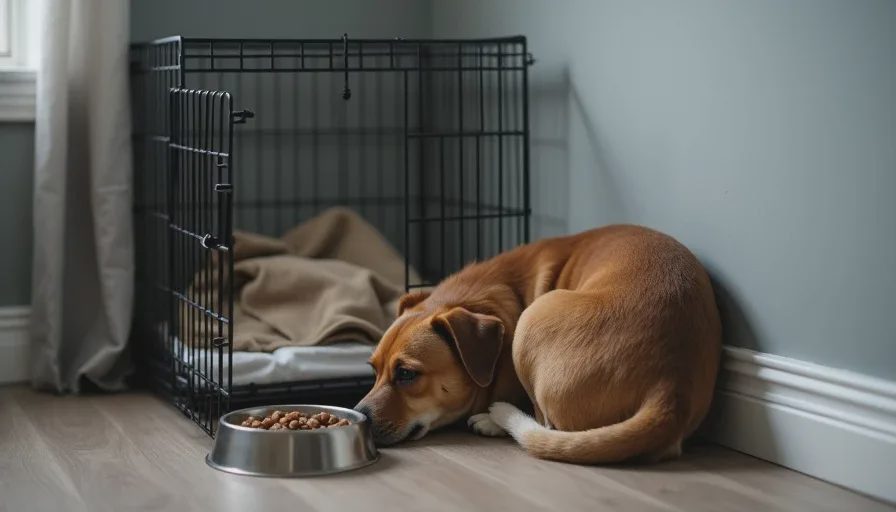
Waffles came home with me on a rainy Tuesday afternoon. I had set up a cozy corner in my spare room with a crate, a blanket, and a bowl of chicken. She ignored all of it and wedged herself behind the toilet in the guest bathroom. For the next five days, she came out only at night when the house was silent, to eat a few bites and sneak outside through the dog door.
A lot of new foster parents panic during this phase. I know I did. I called the shelter every day, convinced she was shutting down. The behavior team told me what I now repeat to every first-time adopter: a scared dog isn't rejecting you. They're waiting to see if this new place is safe. My only job was to not make things worse.
So I sat on the bathroom floor every evening with a book, not looking at her, not reaching for her. I read out loud so she could get used to my voice. By day six, she inched out far enough to sniff my sock. By day eight, she followed me to the kitchen and watched me cook from the doorway. That was the first unglamorous win—and I marked it on my calendar like a birthday.
The Moment I Knew She Wasn't Leaving
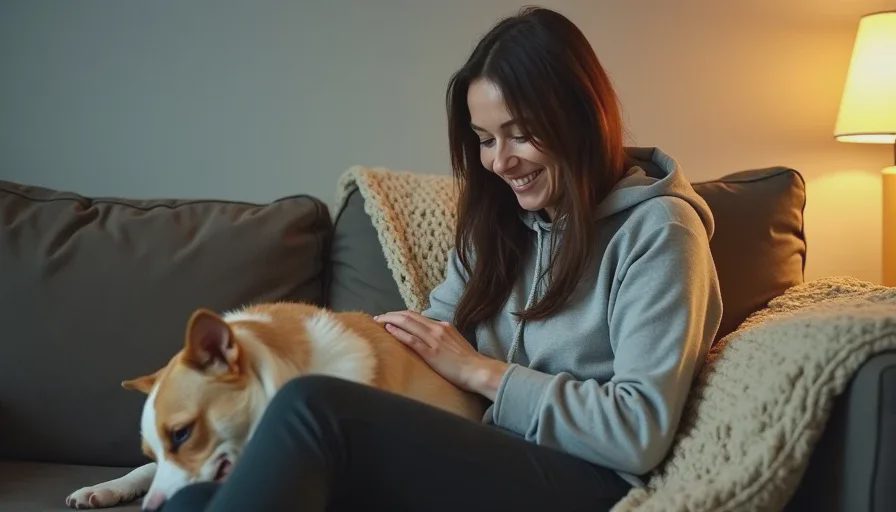
Three weeks in, Waffles did something I still can't explain. I was sitting on the couch, watching a movie, and she jumped up next to me, turned around twice, and flopped her whole body against my thigh. She let out the deepest sigh I've ever heard from a dog. Then she closed her eye and fell asleep.
That was the exact moment I became a foster fail. Not because she was easy, because she wasn't. Not because she was perfect, because she still flinched at sudden noises and refused to walk on hardwood floors for another month. I kept her because she had decided I was her person, and I couldn't imagine handing her to someone else and explaining, "She'll eventually trust you, just give it a few months." She had already given those months to me.
I told the shelter I was adopting her. They laughed—of course you are. Waffles had been at the shelter for nearly five months. Most adopters passed her over because of her eye, her fear, her shutdown body language. She was always the dog no one else would take. I didn't plan to keep her, but somewhere between the bathroom floor and that couch nap, she stopped being a foster and started being family.
What Waffles Taught Me About Second Chance Dogs
Waffles is now somewhere around 13 years old, gray around the muzzle, still one-eyed, still a little weird about hardwood floors. She's the dog who greets me at the door with a grumble and a wagging tail, who barks at the mail carrier like she means it, who lets the cats steal her bed. She's also the reason I started this blog.
Here's what she taught me that no training manual ever did:
Fear is not a personality flaw
Waffles wasn't aggressive, she was terrified. A lot of people confuse the two, especially in the first weeks. A dog who hides, trembles, or avoids eye contact is not necessarily a bad fit for your home. They're communicating the only way they know how.
Progress is measured in inches
The first tail wag, the first nap outside the crate, the first time she walked across the living room without hugging the wall—these were monumental. If I had waited for a big dramatic breakthrough, I'd have missed the small ones that actually mattered.
A foster fail isn't a failure at all
I used to think "foster fail" meant I couldn't do the job right. But keeping Waffles wasn't a failure to let go. It was the moment I understood that sometimes, the animal chooses you too. And when that happens, you don't hand back the leash.
The Dog Who Started It All
Every rescue person has one dog who cracked them open. Waffles is mine. Before her, I thought I understood adoption from the outside. After her, I understood it from the inside of a bathroom, on the wrong side of a closed door, waiting for a scared dog to decide I was worth trusting.
She's the reason Poppy's Pack exists. She's the reason I tell people that a dog who hides for a week is not a lost cause. She's the reason my fridge is covered in gotcha-day photos, and the reason the guest room is rarely empty. Because if a one-eyed, terrified, "too much" dog could become the heart of this house, then the next one can too.
Every good dog was once someone's "too much."
Waffles was my too much. And she's still here, snoring on the couch, reminding me every day that I was right to keep her.
Letters
No letters yet. Yours could be the first.