Affiliate disclosure: This post contains affiliate links. If you purchase through my links, I may earn a small commission at no extra cost to you. I only recommend products I've personally used with my own rescue animals and genuinely stand behind.
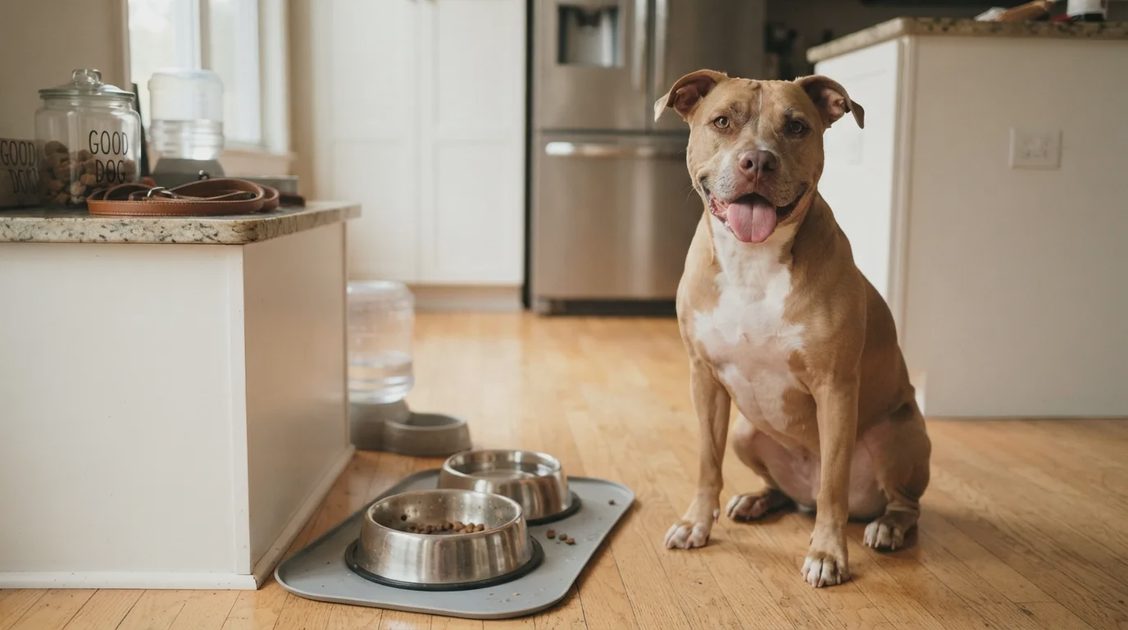
I've lost count of mornings crawling under the table after a plastic bowl Waffles shoved across the floor. Spilled kibble, that plastic-on-tile scraping noise at 6 AM, wet food smeared into the grout lines — I was done. I ordered the PEGGY11 Nonslip Stainless Steel Dog Cat Bowls 2-Pack on a whim and have been quietly relieved ever since. This isn't a flashy product. It's a bowl that does its job and stays out of your way, which is exactly what a busy rescue house needs.
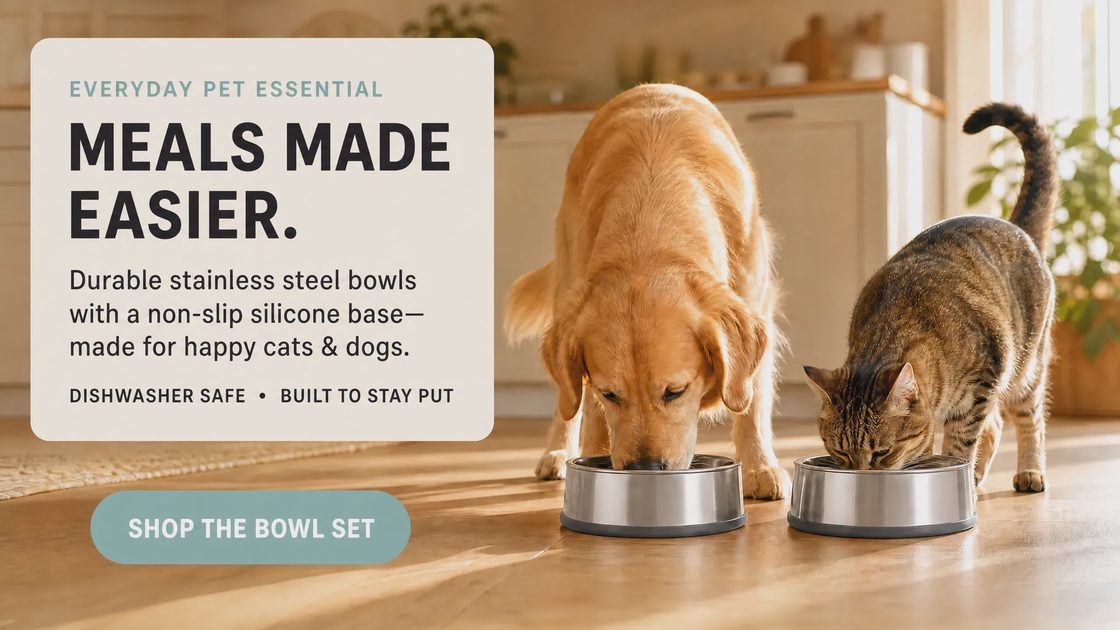
Why Sliding Bowls Matter More Than Most People Think
In a multi-dog, multi-cat rescue house, one determined nose sends a light bowl halfway across the room. Waffles, my hound mix, can relocate a plastic bowl faster than I can set it down. By the time I've poured coffee, the kibble is under the fridge and the bowl is in the hallway.
For first-time adopters, this daily friction adds up fast. You're already navigating house training, separation anxiety, and figuring out what your new dog actually likes to eat. The last thing you need is a bowl that turns every meal into a scavenger hunt. A sliding bowl also means more mess on your floors, more kibble wasted, and a higher chance of your pet developing bad eating habits like eating too fast or knocking the bowl to get attention.
Cheap plastic bowls are the worst offenders. They're light, they scratch easily (which harbors bacteria), and they have zero grip on smooth surfaces. Stainless steel alone helps with weight and hygiene, but without a nonslip base, even a metal bowl will skate across a tile floor when a motivated dog puts its shoulder into it.
What Is the PEGGY11 Nonslip Stainless Steel Dog Cat Bowls 2-Pack?
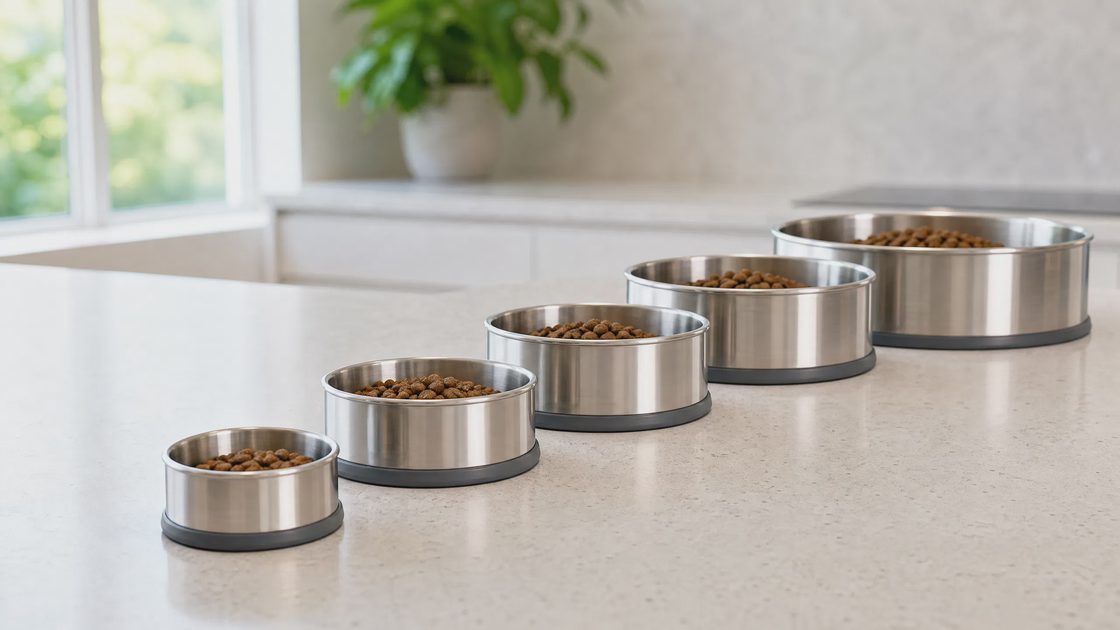
This is a 2-pack of stainless steel feeding bowls with a dark silicone nonslip base ring. Each bowl holds a maximum of 2 US cups (I fill to about 1.5 for messy eaters), measures 5.6 inches in diameter and 1.8 inches in height, and features a smooth flat rim that's gentle on pet whiskers and noses.
The bowls are stackable for easy storage, dishwasher-safe for quick cleanup, and designed to work for both dogs and cats. The silicone base is the key feature — it's not just a pad you stick underneath; it's integrated into the bowl's bottom ring, so it doesn't shift, peel, or get lost in the sink.
I've used them for dry kibble, wet food, raw toppers, and plain water with my own pack and with current foster dogs. Here's what sets them apart from the cheap plastic bowls at the grocery store and the overpriced designer bowls at the pet boutique.
What Makes These Bowls Stand Out
1. The Silicone Base That Actually Stays Put
The silicone ring is why I keep reaching for these bowls over every other option in my cabinet. Three dogs eating at once, two cats weaving between their legs, and the bowls still don't skate across my tile floor. I used to mop up spilled kibble twice a day; now I wipe the floor maybe twice a week.
The base works on hardwood, tile, LVP, and even the slightly textured laminate in my foster room. It's not a suction cup — it's a high-friction silicone ring that grips the surface without sticking, so you can still pick the bowl up easily when it's time to wash it. That's the right balance: enough grip to stop a determined nose, not so much that you're prying it off the floor.
2. Stainless Steel That Cleans Up in Seconds
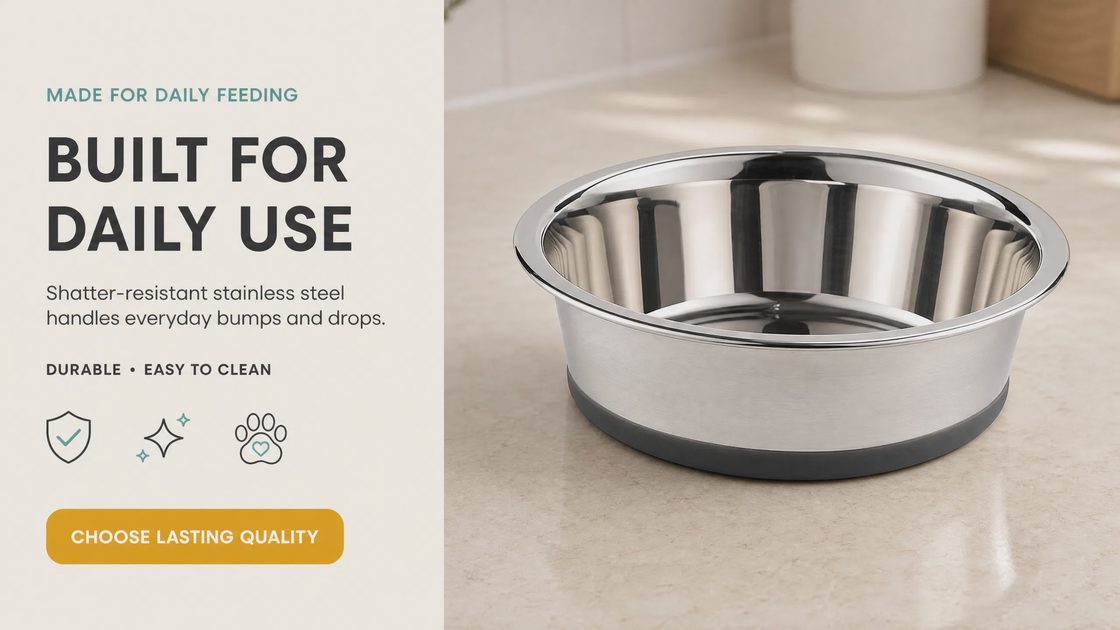
Wet food, raw toppers, canned pumpkin — whatever I serve, these bowls rinse clean under hot water in about ten seconds. For anything caked on, they go in the dishwasher top rack and come out spotless. No plastic smell, no staining from tomato-based toppers, no micro-scratches where bacteria can hide.
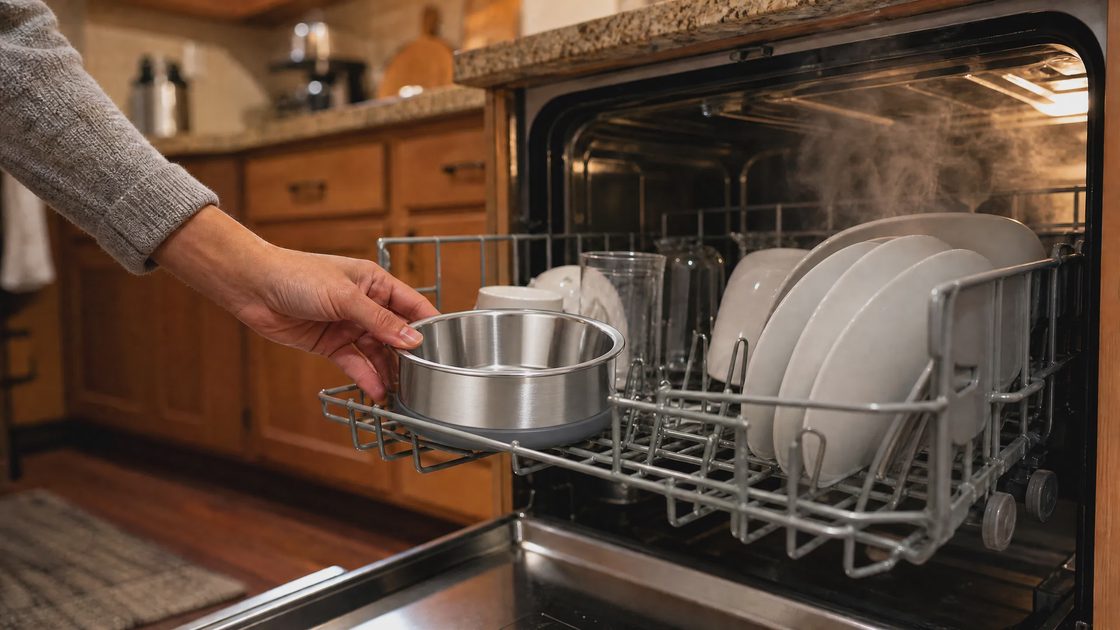
Top-rack dishwasher safe — in and out, spotless every time.
This matters more than people realize. Plastic bowls scratch easily, and those scratches are breeding grounds for biofilm. Even if you wash them daily, the bacteria count climbs. Stainless steel is non-porous, which means it doesn't harbor odor or bacteria the way plastic does. For a foster house where bowls get rotated between dogs with different immune systems, that's a hygiene upgrade, not just a convenience.
3. The 2-Pack Value That Fits a Foster Budget
Two solid nonslip stainless steel bowls for under twenty dollars. That's less than a single designer ceramic bowl at most pet boutiques, and it covers both a food and water station, or two dogs eating side by side.
When you're outfitting a foster rotation or replacing cracked plastic bowls on a tight budget, the math is simple. I keep a set in my permanent pack's feeding area and a backup set in the foster room. At this price, I don't stress if a foster dog decides to use one as a chew toy (hasn't happened yet with stainless, but with plastic it was a monthly occurrence).
4. Stackable Design That Saves Cabinet Space
I didn't think I'd care about this until I had six foster bowls in my cabinet at once. These bowls nest cleanly inside each other, so a 2-pack takes up the same cabinet footprint as a single bowl. When I'm rotating foster dogs in and out, I can stack the clean ones and grab what I need without a bowl avalanche.
The silicone bases don't interfere with stacking — they're thin enough that the bowls still nest, but grippy enough to do their job. It's a small detail, but in a small kitchen with limited storage, it adds up.
5. Smooth Flat Rim That's Gentle on Whiskers
Cats in particular are sensitive to whisker fatigue — that stress response when their whiskers constantly brush against the sides of a deep or narrow bowl. These bowls have a wide, shallow profile and a smooth flat rim, so cats can eat without their whiskers touching the sides. My senior cat Mabel, who used to flip her plastic bowl to get the last few bites, now eats calmly and leaves the bowl alone.
For dogs with flat faces (pugs, bulldogs, boxer mixes), the shallow design also means less face-planting into the bowl. The smooth rim doesn't catch on loose jowls or irritate sensitive skin.
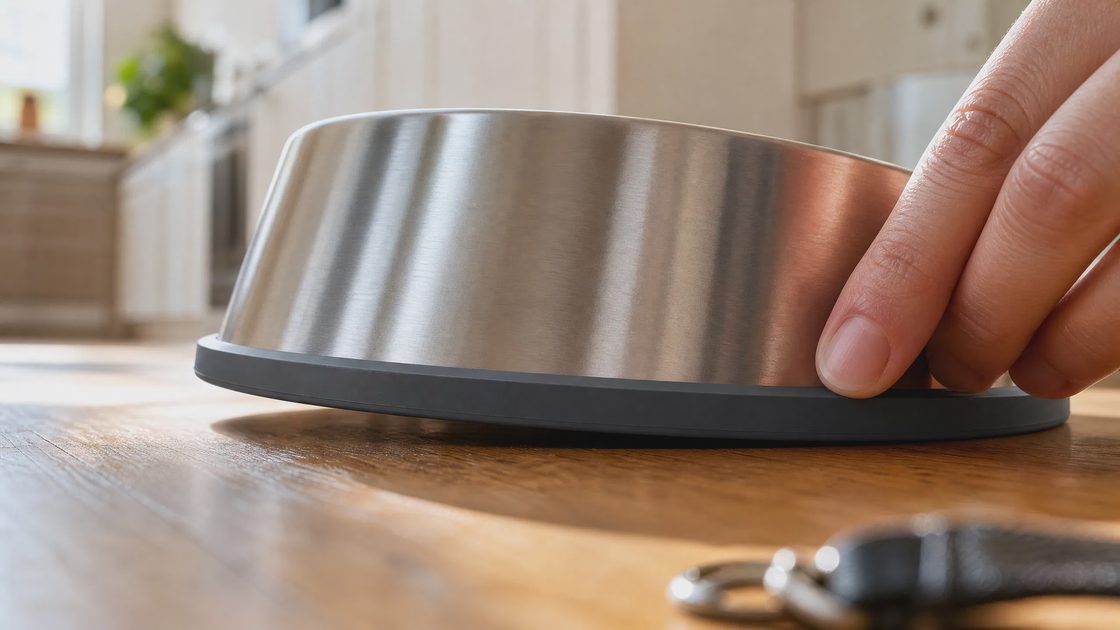
The integrated silicone base ring — grippy enough to stay put, thin enough to stack.
A Few Things Worth Knowing Before You Buy
These bowls are solid, but like any product, they perform best when you understand their limitations upfront.
They Can Still Shift on Very Slick LVP
On standard tile and hardwood, the silicone base holds firm. On very smooth, glossy LVP (luxury vinyl plank) — the kind that's almost slippery in socks — a large, determined dog can nudge the bowl an inch or two during an enthusiastic meal. It doesn't slide across the room like a plastic bowl, but it's not immovable. If you have ultra-slick floors, placing a small placemat underneath solves it completely.
A Small Number of Owners Report Early Rust Spots
I've used mine daily for months with no rust, but I dry them thoroughly after every wash. A few Amazon reviews mention rust appearing at the rim after several weeks, which typically happens when water sits in the bowl or on the rim for extended periods. Stainless steel is stain-resistant, not stain-proof — if you leave water standing in the bowl for days, especially in humid climates, surface rust can develop. The fix is simple: wash, dry, and store upside down.
True 2-Cup Capacity Is to the Rim
The advertised 2-cup capacity is accurate if you fill the bowl to the absolute brim. For everyday use, especially with messy eaters or dogs that inhale their food, I recommend filling to about 1.5 cups. That leaves enough headroom that kibble doesn't launch over the edge when a dog dives in. If you have a large breed dog that needs more than 1.5 cups per meal, you'll want a larger bowl size — this 2-cup model is best for cats, small dogs, and medium dogs under 40 pounds.
Size Recommendation
Pet Type | Weight Range | Bowl Fill | Notes |
Cats | All sizes | ½–1 cup | Shallow design reduces whisker fatigue |
Small dogs | Under 20 lb | ½–1 cup | Perfect for Chihuahuas, Yorkies, toy breeds |
Medium dogs | 20–40 lb | 1–1.5 cups | Ideal for beagles, corgis, terriers |
Large dogs | 40+ lb | 1.5 cups (max) | Consider upgrading to a larger bowl size |
Puppies | All | ½–1 cup | Nonslip base stops bowl-pushing behavior |
Who Should Buy These?
Let me be direct about who gets the most value from these bowls:
First-time rescue adopters: You're already managing a dozen new routines. A bowl that stays put and cleans fast is one less variable. The 2-pack covers food and water for one dog, or food for two small pets.
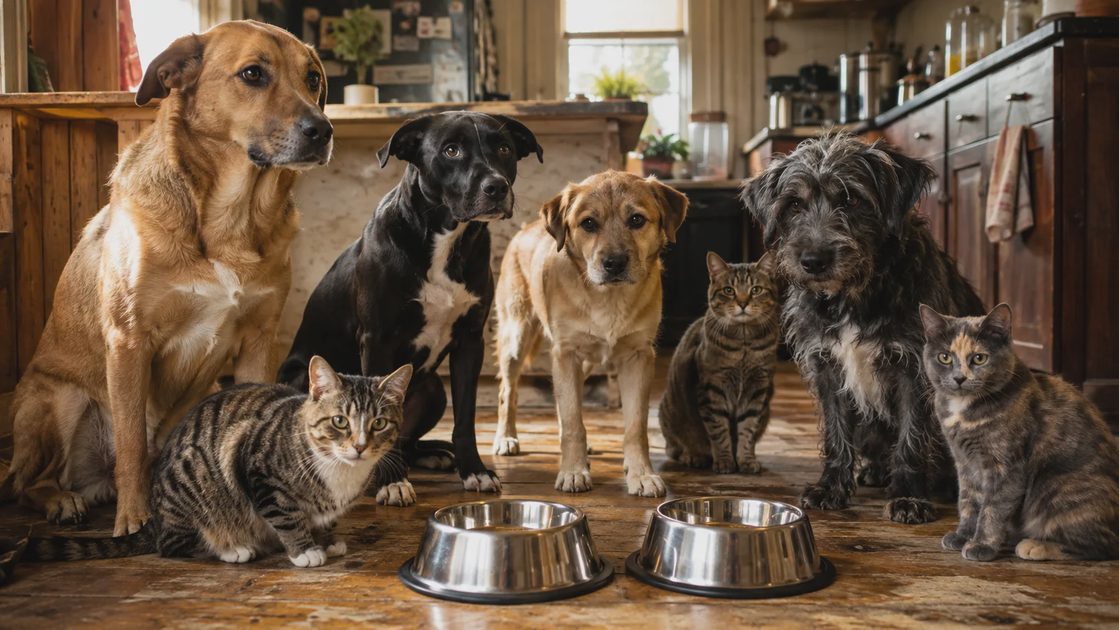
Multi-pet households: If you've got dogs and cats sharing a feeding area, these bowls work for both species. The stainless steel doesn't hold odor between species, and the nonslip base handles the chaos of multiple pets eating at once.
Foster homes and shelters: At under twenty dollars for two bowls, outfitting a foster rotation doesn't break the bank. They're durable enough to survive foster puppies, easy enough to sanitize between intakes, and stackable for storage.
Anyone replacing scratched plastic bowls: If your current bowls have visible scratches, that's bacteria habitat. Upgrading to stainless steel is a hygiene decision as much as a convenience one.
Who should skip these: Owners of large breed dogs (50+ pounds) that need more than 2 cups per meal — you'll want a larger capacity bowl. And if you need a bowl that's literally bolted to the floor for a dog that flips bowls as a behavioral issue, you'll want a heavier or wall-mounted option.
Comparison: Nonslip Stainless Steel vs. Plastic Dog Bowls
Feature | PEGGY11 Nonslip Stainless | Cheap Plastic Bowls |
Nonslip base | Integrated silicone ring | None (slides freely) |
Material | Food-grade stainless steel | Plastic (scratches easily) |
Bacteria resistance | Non-porous, easy to sanitize | Porous scratches harbor biofilm |
Odor retention | None | Holds food smells over time |
Dishwasher safe | Yes (top rack) | Sometimes (warps in heat) |
Capacity | 2 cups (fill to 1.5) | Varies, often 1–3 cups |
Pack value | 2-pack under $20 | Singles $3–$8 each |
Durability | Years with proper care | Crack/chew within months |
The value equation here isn't complicated. Plastic is cheaper upfront, but you'll replace it every few months, and the hygiene cost is real. Stainless steel with a nonslip base costs a little more at the register and lasts for years. For a multi-pet or foster household, the total cost of ownership is lower with stainless.
I don't endorse products I haven't tested or wouldn't use myself. The PEGGY11 Nonslip Stainless Steel Dog Cat Bowls 2-Pack sits in the category of "obvious yes" for anyone tired of chasing bowls across the floor.
Two bowls, silicone nonslip bases, stainless steel that cleans in seconds, and a price that fits a foster budget. If your kitchen floor currently has a kibble trail leading under the table, there's no good reason not to swap these in.
Check current price on Amazon
Quick Spec Summary
Pack size: 2 bowls
Capacity: 2 US cups max (recommend filling to ~1.5)
Diameter: 5.6 inches
Height: 1.8 inches
Material: Food-grade stainless steel with dark silicone nonslip base ring
Finish: Smooth flat rim, polished interior
Dishwasher safe: Yes (top rack)
Stackable: Yes
Best for: Cats, small-to-medium dogs, puppies, multi-pet households, foster homes
Works on: Tile, hardwood, LVP, laminate (use placemat on ultra-slick surfaces)
ASIN: B0BDZ8WBG6
FAQ
F: How long does shipping take?
Q: Prime orders arrive in 1–2 days. Standard shipping takes 3–5 business days.
F: Can these bowls be used for wet food?
Q: Yes. Stainless steel handles wet food, raw toppers, and canned food without retaining odors or staining. Rinse or toss in the dishwasher after use.
F: Are they dishwasher safe?
Q: Yes, they're top-rack dishwasher safe. I recommend drying the rim thoroughly afterward to prevent any water spots or surface rust.
F: Do they work for both puppies and cats?
Q: The 2-cup size fits most cats and small-to-medium dogs. The nonslip silicone base is especially helpful for puppies who tend to push their bowls around while eating.
F: Will stainless steel bowls rust?
Q: Most users have no rust issues when the bowls are washed and dried properly. Stainless steel is stain-resistant, not stain-proof — avoid leaving standing water in the bowl for days, and dry after washing.
F: Are stainless steel bowls better than plastic for pets?
Q: Generally yes. Stainless steel is non-porous, so it doesn't scratch or harbor bacteria the way plastic does. It's also more durable and doesn't retain food odors over time.
About Poppy
Poppy Prescott lives in Louisville with her husband Ben, four rescue dogs, three rescue cats, and fosters named after breakfast foods. She has adopted, fostered, rehomed, and foster-failed 30+ animals over 12 years. She writes for the first-time adopter wondering if they're good enough.
Every good dog was once someone's "too much."

Letters
No letters yet. Yours could be the first.