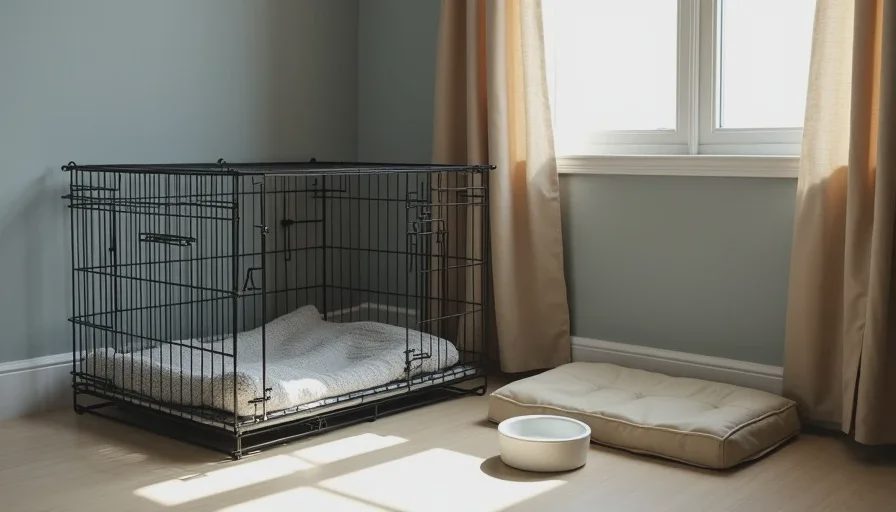
When I brought Waffles home twelve years ago, I thought I had everything ready. I'd bought a wire crate, a plush bed, a stainless steel bowl, and a bag of high-quality kibble. I set the crate up in the corner of my bedroom, put the bed inside, and assumed that was enough. It wasn't. Waffles spent her first five days wedged behind the guest bathroom toilet, not because the crate was bad, but because a crate is not a safe room for a rescue dog. It's a piece of furniture. A safe room is a whole environment, and getting the setup right can mean the difference between a dog who starts to decompress in week one and a dog who stays shut down for a month.
Since then, I've set up safe rooms for more than thirty foster dogs and cats, and I've learned the same lesson over and over: the room matters more than the crate inside it. If you're bringing home a new dog, here's the safe room checklist I wish someone had handed me before that first night with Waffles.
Choose the Right Room Before You Choose Anything Else
Not every spare room works as a decompression space. The first thing I look at is traffic flow. The room should be quiet, but not completely isolated. A dog who can hear the house—the soft sounds of you cooking, the occasional rustle of another pet—learns that the household is still there without having to face it. But a room next to the front door, or one that everyone walks through to reach the bathroom, is too stimulating.
I also avoid rooms with direct access to busy windows. A dog who just left a shelter doesn't need to watch the mail carrier approach the porch every afternoon. If the only spare room has a big window facing the street, I keep the curtains closed for the first several days and cover the lower half with a towel if the dog seems reactive to movement outside.
The room should have a door that closes completely. A baby gate alone isn't enough for the first week. I use a solid door, and I put a small rolled-up towel at the base to block scent from flooding in all at once. It lets me control the dog's exposure to the rest of the house.
What Goes Inside: The Essentials
The core of a safe room for a new rescue dog is simple, but each item has a job. I don't fill the room with toys and beds and enrichment puzzles on day one. I start with fewer things, arranged in a way that gives the dog clear choices.
A crate with the door removed or tied open
I don't use the crate as a containment tool in the first few weeks. I leave the door open, or remove it entirely, and put a soft blanket inside. The crate becomes an optional cave, not a jail. Some dogs go in immediately. Some never touch it. Either is fine. The point is that it's there if they want a den-like space, and they can leave whenever they choose.
A second bed outside the crate
A single bed inside a crate gives a dog only one place to rest. I put a second, flatter bed in another corner of the room, away from the crate. This gives the dog a choice between a covered spot and an open one, which tells me a lot about their comfort level. A dog who chooses the open bed after a few days is starting to trust the space.
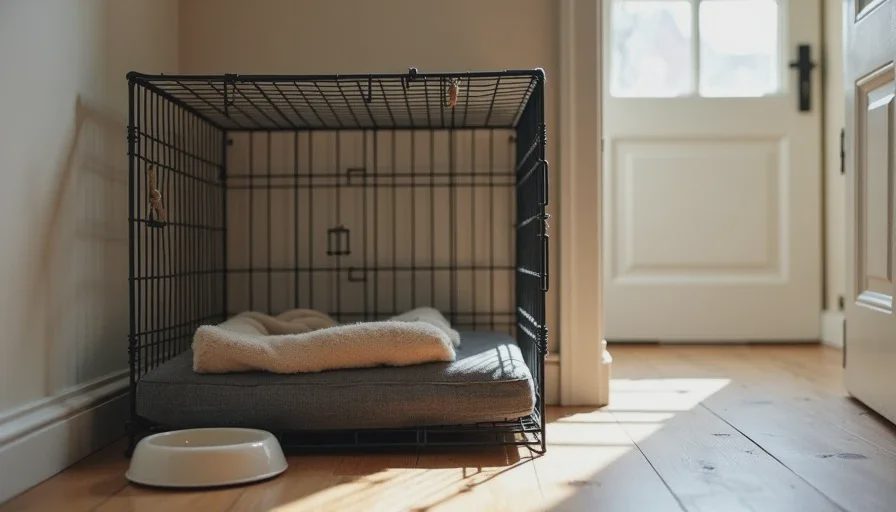
Water in a heavy, tip-proof bowl
I use a ceramic or weighted stainless bowl, not a light plastic one. A scared dog can tip a plastic bowl in two seconds, and then they're lying on a damp floor with no water. The bowl goes near the door, so I can refill it without walking all the way into the room and startling the dog.
A potty area only if there's no other option
If the safe room is far from an outside door, or if the dog is too scared to leave the room, I set up a potty pad or a shallow tray with grass-like material in the farthest corner from the beds. I don't love potty pads, because they can create confusion later. But a dog who's too scared to walk through the house to the back door needs an option that isn't the floor. I've used them for the first few days with extremely shut-down dogs, then removed them once the dog can follow me outside.
Minimal toys and chews
I put one or two low-arousal items in the room—a soft chew, a stuffed Kong with a little peanut butter, maybe a rope toy. Too many toys can overwhelm a dog who's never played before. I've had fosters look at a pile of toys like it was a bomb. One quiet option is better.
What I Leave Out: The "Later" List
Some things are right for later, but wrong for the first week. I've learned to keep them out of the safe room until the dog shows me they're ready.
No food bowl in the room
This surprises people, but I don't leave a full food bowl in the safe room. Instead, I feed the dog by hand or scatter food on the floor near me, a little at a time. This connects me to the food source and gives the dog a reason to approach without forcing them to guard a bowl. If the dog won't come near me, I leave a small amount of food just inside the doorway and step back. The bowl itself goes outside the room.
No loud toys or squeakers
Squeaky toys can trigger prey drive or fear in a dog who's already overstimulated. I keep squeakers out of the safe room entirely. Later, once the dog is more confident, they can have all the squeaky chaos they want.
No resident pet beds or cat trees
This may sound obvious, but don't put another animal's bed or blanket in the safe room as a "comfort item." The new dog doesn't need to smell another animal's territory while they're trying to settle. Scent swapping comes later, and it should be deliberate, not accidental.
The Small Setup Mistakes That Can Slow Things Down
I've made most of these mistakes so you don't have to.
The bed against the wall
A bed placed tightly against a wall can make a dog feel cornered if they're approached from the front. I leave space around at least two sides of every bed, so the dog can see an exit route. That's especially important for dogs who have been trapped or handled roughly in the past.
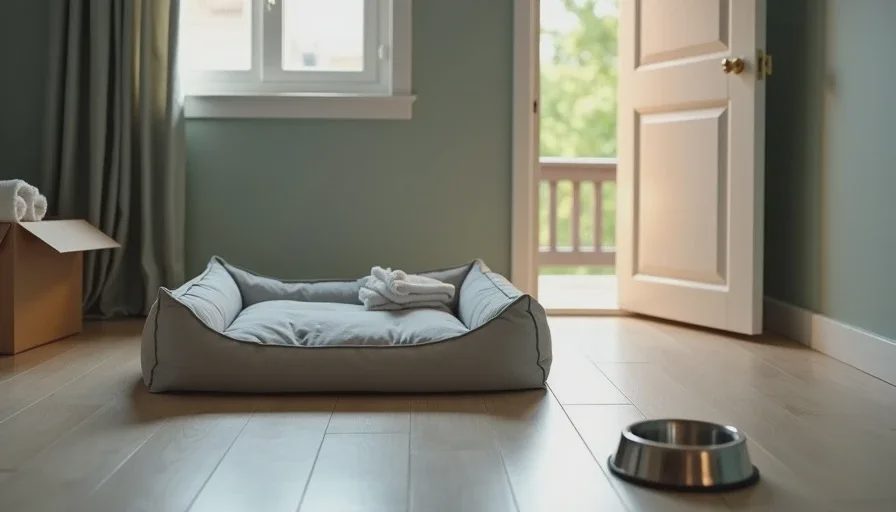
The crate facing the door
If the crate opening faces the room's door, the dog is forced to watch the only entry point. I angle the crate so it faces a wall or a corner, but with the opening still visible from inside. This gives the dog a feeling of retreat without blocking their view entirely.
Too much light
A bright overhead light can make a scared dog feel exposed. I use a small lamp with a warm bulb, or just let natural light come through a curtain. The room doesn't need to be dark, but it should feel like a den, not an examination room.
The room changes too fast
One of the most common mistakes is redecorating the safe room every day—adding a new toy here, moving the bed there, switching the blanket. Every change resets the dog's sense of predictability. I set the room up once and leave it almost identical for the first two weeks. If I need to clean or refill water, I do it at the same time each day and in the same way.
How Long Does the Safe Room Stay?
There's no set answer, but I usually keep the room fully set up for at least two weeks, even if the dog starts exploring the house during the day. The safe room stays available as a retreat. Some dogs use it for months. Biscuit still naps in his original safe room when the house gets busy, and he's been here for a year.
The key is that the safe room isn't a punishment or a holding cell. It's the first place the dog learns that nothing bad happens here. The room itself becomes a signal: this is where you can rest. That signal is more valuable than any piece of training equipment I've ever bought.
If you're setting up a safe room for a rescue dog right now, keep it simple. A door that closes, a quiet corner, two places to lie down, water within reach, and as little change as possible. That's the whole list. Everything else can wait.
Every good dog was once someone's "too much."
And most of them just needed a room that felt like theirs.
No notes yet — write the first one.