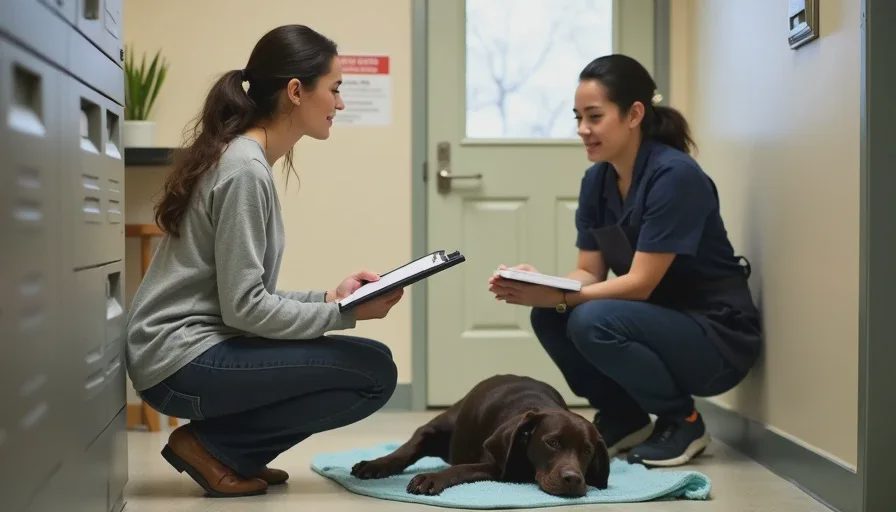
When I adopted Waffles twelve years ago, I signed the papers without asking a single question. Not one. I didn't ask about her medical history, her behavior in the kennel, whether she had ever lived in a house, or what to expect in the first week. I just wanted to get her out of there. I was in love with the idea of saving her, and love made me skip the part where you gather information. I got lucky, but plenty of adopters don't. Now, as someone who has sat on both sides of the adoption table, I want to tell you the questions to ask before adopting a dog that I wish I had known to ask. Not because the shelter is hiding anything, but because the answers will tell you whether this dog is actually a fit for your life—and whether you're ready for theirs.
Adopting a rescue dog is not a mystery. Most shelters and rescues have more information than they put on the website, and they will share it if you ask. The problem is that most people don't ask, either because they're nervous or because they think it makes them look difficult. It doesn't. Asking questions makes you look prepared. And prepared adopters are the ones volunteers feel good about sending home with a dog.
Questions About Health and Medical History
This is the section people skip because it feels uncomfortable, like asking a seller if the car has ever been in an accident. But a dog's health history matters more than almost anything else in the first year. I learned this the hard way with Biscuit, whose heart murmur was listed on his intake form but never mentioned in my conversation with the shelter. It wouldn't have changed my decision, but I would have budgeted differently.
"What medical records do you have?"
Ask for everything: vaccination records, spay or neuter status, dental notes, bloodwork, and any known conditions. A shelter that does a full intake will have a file. A rescue that has had the dog in foster care will have even more. If they don't have records, ask what the dog was treated for on intake. Knowing that a dog had a skin infection or an upset stomach on arrival tells you something about the stress they've been under.
"Are there any current medications or ongoing conditions?"
Some dogs are on anxiety medication, arthritis medication, or a special diet. That's not a red flag, but it is a responsibility. You need to know before you sign, not after you get home and find a pill bottle in the bag of supplies. I've had fosters with chronic allergies who needed weekly baths, and adopters who balked at that because they only found out after the adoption was finalized. Ask early, and ask clearly.
"Is there a wellness exam included in the adoption fee?"
Many shelters include a basic vet check or a discount on the first visit. It's not a huge thing, but it helps to know what you're paying for. Some rescues also provide a short window of post-adoption veterinary support. If you don't ask, you might miss it.
Questions About Behavior and History
This is where the real matching happens. A dog's behavior in the shelter is not always the same as their behavior in a home, but there are clues. The more you ask, the more you can prepare for the transition.
"What have you observed about this dog's behavior with people?"
Not just "is he friendly?" but "does he approach new people on his own, or does he hang back?" and "has he ever shown fear or aggression toward anyone?" Shelters and rescues sometimes use gentle language to describe difficult behaviors, so it helps to ask follow-up questions. "What does 'shy' look like for him?" is a better question than "Is he shy?" because it gets you specifics.
"Has this dog lived in a home before?"
This one changed how I think about placements. A dog who has lived in a home knows what a couch is, understands stairs, and may be house-trained. A dog who has spent most of their life in a kennel or on the street may not know any of that. Neither is better, but they need very different first months. I always ask, because it tells me whether I'm preparing for a dog who needs to learn indoor life or one who just needs to remember it.
"How does this dog react to other animals?"
If you have cats, don't just ask "is he good with cats?" Ask "has he actually met a cat, and what happened?" The same goes for other dogs. A dog who has never met a cat is an unknown, and unknown means risk. I've fostered dogs whose online profile said "good with dogs" because they simply had never shown aggression in a kennel environment—but that's not the same as being social with a resident dog in a living room. Ask for specifics.
Questions About Daily Life and Routine
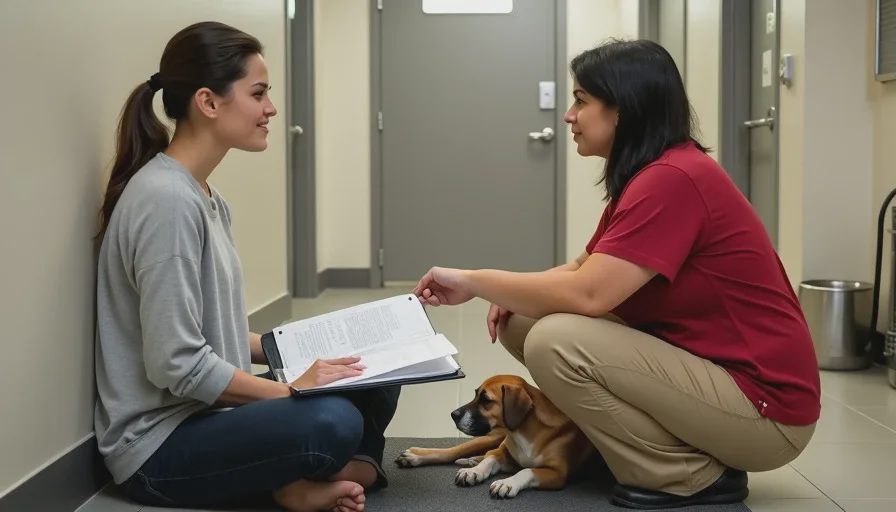
The first week home is shaped by what you know about the dog's current routine. These questions feel small, but they matter enormously.
"What is this dog's current schedule?"
When do they eat? When do they go outside? Are they used to a crate, a bed, a specific kind of surface? The closer you can match their current schedule in the first week, the easier the transition will be. I've had adopters ask me what time I fed a foster, and it made all the difference when the dog came home and found dinner at the same hour.
"What are this dog's known triggers?"
Every dog has something—a sound, a movement, a type of person, a situation. One of my fosters was terrified of men in hats. Another couldn't handle the sound of a vacuum cleaner. If the shelter or foster knows the triggers, ask. It won't make the triggers disappear, but it will help you avoid them early on and plan around them while the dog decompresses.
"What has the dog been eating?"
A sudden food change can cause digestive upset, which is the last thing a stressed dog needs. Ask what food the dog is currently eating and whether you should transition slowly. Most rescues will send you home with a small bag or can tell you what to buy. It's a simple question that prevents a messy first week.
Questions About After You Sign
The adoption doesn't end when the papers are signed. The best shelters and rescues want to stay involved, at least for a while. Ask what that looks like.
"What kind of post-adoption support do you offer?"
Some rescues have a behavior hotline, a private Facebook group for adopters, or a trainer they work with. Others will tell you to call if anything comes up. Know what's available before you need it. The moment your new dog is hiding behind the couch at 10 p.m., you'll be glad you asked.
"What happens if this doesn't work out?"
This is the question almost no one asks because it feels like admitting defeat before you've started. But you need to know. A good rescue has a return policy, and they will not judge you for asking about it. The answer tells you whether they stand behind their placements. When I returned Gravy, I already knew the process because I'd asked. It made a hard decision slightly easier.
The Question I Ask Myself Before Every Signing
There's one question I ask myself before I sign anything, and it's not on any form. It's this: "If this dog's behavior never changes from what it is today, can I still give them a good life?"
It's not about expecting the worst. It's about being honest. If the answer is no, I'm not ready. If the answer is yes, then everything else is just details. The dog in front of you is the dog you're signing for—not the dog you hope they'll become after three months of love.
Ask Without Apology
I've seen too many adopters nod along during the conversation and then text me later with questions they were afraid to ask in person. Don't do that to yourself. The shelter staff and volunteers are not there to judge you. They're there to help you make a decision you can live with for the next ten or fifteen years. That decision deserves more than a nervous smile and a quick signature.
The best adopters I've worked with were not the ones who knew everything. They were the ones who asked the questions other people were too proud to ask. They wanted to know about the dog's weird habits, the embarrassing health stuff, the part where the shelter volunteer says, "Honestly, he's been a little mouthy when overexcited." They didn't run from that. They used it to prepare.
So ask. About the health, the behavior, the food, the schedule, the return policy. Ask about the dog's good days and their hard days. Ask until you can picture a Tuesday afternoon with this dog—not just the gotcha-day photo, but the ordinary, unglamorous Tuesday. Because that's the day you're really signing up for.
Every good dog was once someone's "too much."
And every good adoption starts with a conversation where nobody is afraid to ask.
Letters
No letters yet. Yours could be the first.