People assume a rescue transport run is emotional and cinematic—dogs pouring out of vans into waiting arms, tails wagging, maybe a tearful volunteer or two. Sometimes that's true. Usually it's not. A real dog transport volunteer shift starts in the dark, smells like nervous pee and bleach, and involves more paperwork than puppy cuddles. I've been doing Saturday runs for my county shelter for a few years now, and the honest description is this: it's a relay race where the baton is a terrified animal in a plastic crate, and every leg matters.
I'm not a professional transporter. I'm just a person with a car big enough for a few crates, a willingness to wake up unreasonably early, and a deep belief that moving dogs from overcrowded shelters to places with empty kennels is one of the most quietly important jobs in rescue. Here's what an actual Saturday looks like, from alarm to drop-off.
The 5:45 a.m. Wake-Up Call
My alarm goes off at 5:45, but I've usually been awake since 5:30, watching the ceiling and mentally reviewing the route. The first thing I do is start coffee. The second thing is load the car: a few old towels, a roll of paper towels, a spray bottle of enzyme cleaner, a jug of water, and a small first-aid kit that includes slip leads and a muzzle I hope not to use. I wear clothes I don't care about. Transport is not a fashion event.
The drive to the shelter takes about twenty minutes. The roads are empty, the sky is still a little gray, and I go over the checklist in my head: gas tank full, phone charged, crates secured, back seats folded down. The shelter's transport coordinator texts me a final update: "Van running 20 minutes late. Two extra crates added." That's normal. You learn to expect changes.
The Parking Lot Handoff
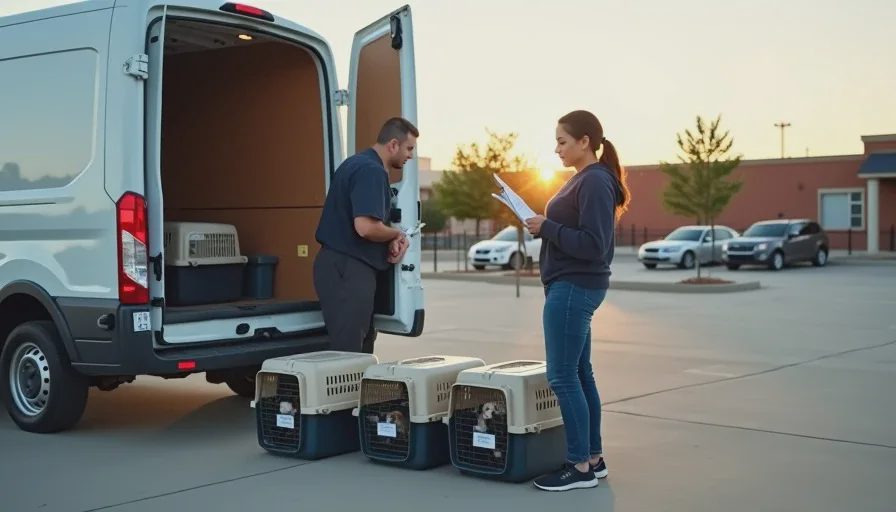
The transport van pulls into the back lot around 6:40 a.m. It's a big white van with out-of-state plates and a faint smell that reaches you before the doors open. The driver hops out with a clipboard and a tired smile. We've done this enough times that the greeting is mostly logistics: "Five dogs for you, one is a pull from the emergency list. The shepherd mix didn't eat this morning."
I sign the intake sheet before I even look at the dogs. That's the part that surprises people. But the paperwork comes first, because the dogs' records have to move with them. Each crate has a medical summary, a vaccination sheet, and a transport manifest. If anything gets lost in the handoff, it's a mess downstream. So I stand in the parking lot with a pen and a clipboard, checking names against crate numbers, while the driver stacks carriers on the pavement.
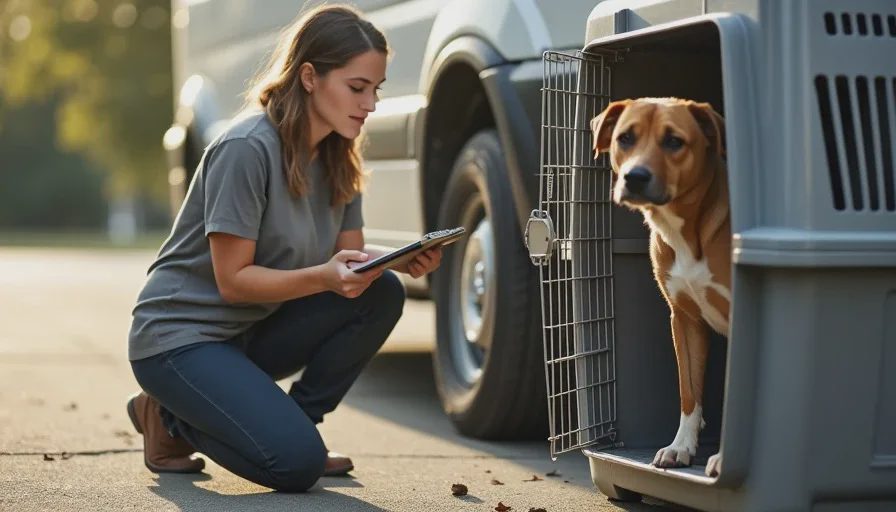
The dogs are quiet. They usually are. Some are shut down from the drive, some are asleep, some are just too tired to make noise. A few watch me with wide eyes. I don't open the crates here. That's a rule. The parking lot is not the place for a loose, terrified dog.
What I Check Before Signing Anything
Before I close the tailgate and drive away, I do a quick visual check on each dog through the crate bars. The driver has already done their own checks, but I want my own eyes on the animals I'm responsible for.
Paperwork basics
I confirm each dog's name, sex, approximate age, and any medical alerts. I look for "NPO after midnight" notes if a dog is scheduled for a spay or neuter later that day. I check for "fear reactive" or "no other dogs" warnings. The paperwork tells me how to stack the crates in my car and who can ride next to whom.
Reading the dog in the crate
Through the bars, I'm looking for obvious problems: labored breathing, bloody stool, vomiting, glazed eyes. If a dog is panting heavily and it's 65 degrees out, that's a red flag. If a dog is curled in a corner and won't lift its head, I take a second look. Most issues are stress-related. Some are not. A dog who's bleeding or unresponsive doesn't get in my car without a call to the coordinator.
I also make a quick note of each dog's body language. The one pressed against the back of the crate needs quiet. The one wagging its tail and whining for attention will probably bark for the first hour. Knowing this helps me arrange the crates so the nervous dogs aren't staring at the excited ones.
The Middle Leg: Driving with Lives in the Back
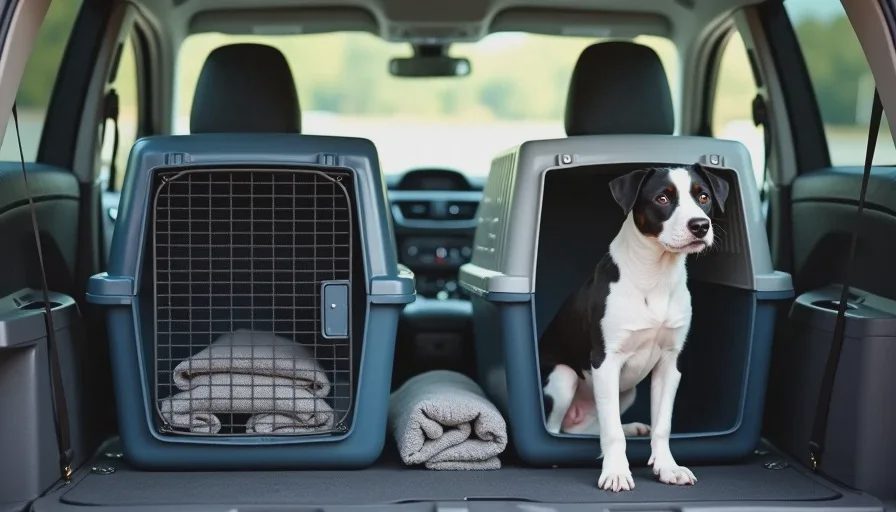
Once the crates are loaded and the paperwork is in my front seat, I pull out of the lot and head toward the next exchange point. It's usually a two- to three-hour drive, and it's mostly uneventful. That's how you want it. Excitement on a rescue dog transport run is bad.
I keep the radio off or very low. I don't blast air conditioning directly on the crates, and I keep the windows up to reduce highway noise. Every forty-five minutes or so, I pull into a rest area or a quiet side street and do a quick walk-around: peek through each crate, offer water through the bars if a dog seems alert, and check for any messes. Some dogs don't drink on the road. That's normal. Others will tip the water dish the second you put it in. I've learned to offer small amounts, not a full bowl.
The smell can get intense by hour two. Even healthy, clean dogs sometimes vomit or relieve themselves in the crate from stress. I keep the paper towels and enzyme spray where I can reach them without pulling over. If a dog has soiled itself badly and I'm less than an hour from the drop-off, I usually just make a note for the receiving shelter rather than trying to clean a terrified dog in a parking lot. That's a judgment call, and you get better at it.
I don't stop for coffee. I don't linger at rest stops. The goal is to keep the journey as short and predictable as possible. Every extra minute in the car is another minute of stress for an animal who doesn't understand where they're going.
The Drop-Off: When the Journey Ends
By mid-morning, I reach the receiving shelter or the foster home parking lot. This is where the run gets emotional, but not in the way people expect. It's not the big, tearful reunion you see online. It's a quiet, efficient handoff to a kennel tech or a tired foster parent who's been waiting in their own car.
I unload the crates one by one, call out each dog's name, and pass along the paperwork. I mention anything I noticed on the drive: the shepherd mix didn't drink, the terrier whined for the first twenty minutes but settled, the hound mix had a small amount of diarrhea at the rest stop. These notes matter. They help the next person know what to expect.
Then I sign the drop-off form, fold my dirty towels, and drive home with the windows down, even if it's cold. The van is empty, but the smell lingers. So does the weight of it.
The Part Nobody Posts About
Here's what I wish more people knew about dog transport volunteer work: it's not heroic. It's repetitive. It's early mornings and dirty crates and a lot of time alone in your own head. It's watching a dog press its face to the crate bars and not being able to explain that they're safe now. It's driving away from a shelter knowing that dog might get adopted or might not, and you won't always find out.
But it's also this: the moment a crate is unloaded and the dog takes its first cautious step onto new pavement, and someone says, "Hey, buddy, you made it." That's the part that gets me. Not the dramatic rescues. The quiet arrivals.
Every good dog was once someone's "too much."
And some of them, before they ever find home, spend a Saturday morning in the back of a stranger's car, going somewhere better. I'm honored to be the stranger.
Letters
No letters yet. Yours could be the first.