You can foster senior dogs without being a veterinary expert or having a perfectly quiet house. You do need a safe place for a dog to rest, an honest conversation with the rescue about medical care and costs, and enough flexibility to learn what this particular dog needs. Some older dogs settle in easily; others need medication, help with stairs, or time to feel safe. A good rescue should help you figure out which dog fits your life.
I know the application can make you feel as though you need a spotless record and a fenced estate. You don't. Be truthful about your schedule, pets, budget, and limits. A realistic match is kinder to everyone than saying yes to care you can't provide.
What fostering an older dog involves
When you foster senior dogs, you provide a temporary home while a shelter or rescue remains responsible for the placement. Depending on the organization, that may mean feeding and walking the dog, giving prescribed medication, reporting behavior changes, and helping potential adopters learn what the dog is like at home. Some fosters last a few weeks; others last much longer. Ask what happens if the placement isn't working.
Age alone won't tell you whether a dog is calm, house-trained, or comfortable with cats. An older dog may still love a long sniffy walk, while another needs short outings and a soft place to land. Some have lived in homes; some have histories nobody can fill in. Think of the first few days as an introduction, not a test either of you has to pass.
A foster-to-adopt arrangement is different: you are considering making the placement permanent. If that's what you want, ask whether the organization offers it and when you would need to decide. It's also perfectly good to foster with no intention of adopting.
Questions to ask before you say yes
Before you foster senior dogs through an organization, ask who pays for routine appointments, medications, food, and emergency care. Many rescues cover some expenses, but arrangements differ. Get the answers in writing, including whether you must use a particular veterinarian and who can authorize treatment.
Ask for the dog's known medical history and a clear medication schedule. Can the dog take stairs? Are there known issues with hearing, vision, teeth, mobility, or bladder control? What has the organization actually observed around other animals and children, and what is still unknown? An honest “we don't know” is useful information.
Also get a daytime contact and an after-hours emergency number. If you work outside the home, say how long the dog would be alone. If lifting a dog is beyond your physical ability, say that too. These aren't admissions of failure; they're the details that help a coordinator make a safer match.
Set up a comfortable landing spot
You don't need a whole room of new gear to foster senior dogs. Start with a washable bed or folded blankets in a quiet, accessible area, fresh water nearby, and secure footing on the route to the door. Runners or nonslip mats can make smooth floors easier to navigate. A low-sided bed may be easier for a stiff dog to enter.
Block off stairs if they're unsafe, and ask the rescue before using ramps, lifting equipment, or mobility aids. Keep food, medication, and cleaning supplies where other pets can't get into them. If accidents are possible, protect flooring with washable layers rather than scolding the dog. Pain, illness, confusion, and an unfamiliar routine can all play a part.
For the trip home, ask how the dog travels and use a secure, appropriately fitted harness or carrier. Check tags and the organization's instructions before the first outdoor break. Even a slow-moving dog can slip out of an unfamiliar yard or through an open door.
The first week: quiet, routine, and observation
When I foster senior dogs, I would rather see a small, boring first day than a parade of visitors. Give the dog time to sniff, rest, and find the water bowl. Offer bathroom breaks regularly, including after waking and eating, and use the food and feeding instructions supplied by the rescue. Ask before changing a diet, especially if the dog has a medical condition.
Introduce resident pets gradually. Start with separation and follow the rescue's guidance for controlled introductions; don't leave animals together unsupervised just because the first meeting looked fine. Feed separately and put high-value treats and toys away at first. Give the newcomer an exit and a place where nobody will bother them.
Write down what you notice: appetite, drinking, bathroom habits, sleep, movement, and any coughing or signs of discomfort. Share changes with your rescue contact rather than assuming they're simply part of aging. Trouble breathing, collapse, or inability to urinate calls for urgent veterinary attention; use the emergency plan you agreed on, or contact an emergency veterinarian if you can't reach the rescue promptly.
Medication, appointments, and the hard days
You can foster senior dogs with medical needs without knowing everything on day one, but you should feel able to follow the specific care plan. Ask the vet or rescue to demonstrate anything unfamiliar and explain what to do if a dose is missed. Never give human pain medication or change a prescription without veterinary direction.
Some placements involve hospice care: comfort-focused support for a dog with a serious or life-limiting condition. Ask what symptoms to watch for, who makes veterinary decisions, what expenses are covered, and how the rescue will support you if the dog's condition worsens. You are allowed to say that hospice is more than you can take on.
If caregiving, disrupted sleep, or worry becomes too much, contact the coordinator early. Ask about respite care, practical help, or a new placement. Rehoming a foster through the organization when you can't meet the dog's needs is not the same thing as giving up on them.
Helping your foster find home
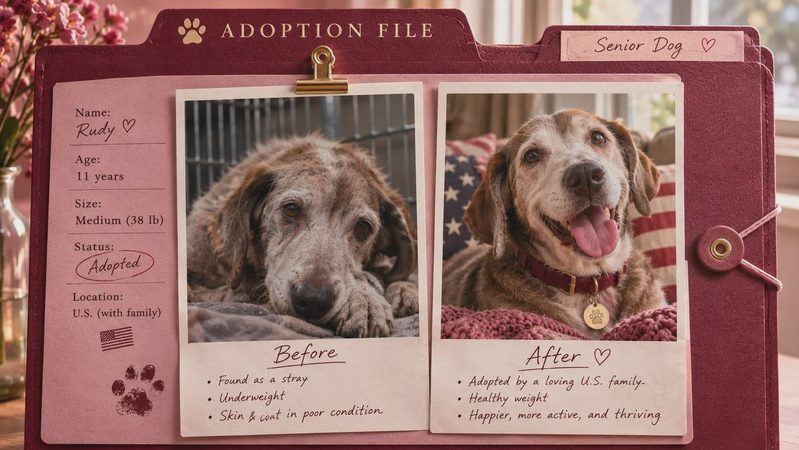
People who foster senior dogs can give adopters something a kennel card can't: a picture of ordinary life. Tell the rescue what you've actually observed. Does the dog relax during a workday, ask to go outside, enjoy gentle brushing, or need help getting into a car? Mention challenges and what helps, too. “Has had accidents while settling in” is more useful than a blanket promise that the dog is house-trained.
Ask before posting photos or speaking with applicants, since organizations handle adoptions differently. And make a plan for the goodbye. It can hurt even when the match is wonderful. That sadness doesn't mean you made the wrong choice; it means a dog had a safe place to be while their next chapter came together.
If you're ready to begin, contact a local shelter or rescue and ask about its foster orientation and senior-dog placements. Tell them what you can offer and what you can't. Every good dog was once someone's “too much,” and sometimes the right help starts with one honest application.
Letters
No letters yet. Yours could be the first.