The photos make senior dog adoption before and after look like a straight line from worried shelter face to happy couch potato. Sometimes it is. Just as often, the real transformation is quieter: a dog who finally sleeps deeply, takes a treat, or walks into the kitchen without checking the exit. Expect an adjustment period, a veterinary visit, and some surprises—not a guaranteed personality makeover. An older dog can bring wonderful companionship, even if the after picture includes medication, accidents, or a favorite hiding spot.
Before you bring a senior dog home
Ask the shelter or rescue what they know about the dog's health, daily routine, and behavior. Useful questions include whether the dog takes medication, has trouble with stairs, has lived with other animals, or has shown discomfort when handled. Ask for copies of medical records and the name of the food they're eating. It's also fair to ask what remains unknown; a short shelter stay doesn't reveal everything.
Be honest about your household. A dog who needs frequent bathroom breaks may not be the right match for someone away all day without help. A dog with uncertain history around cats will need careful management in a home with cats. None of that makes you a bad adopter. It makes you someone thinking beyond the photograph.
Before pickup, set up a quiet resting place on one level if possible. Put down washable bedding and secure loose rugs that might slide under unsteady feet. Have a leash, a properly fitted collar or harness, food, and an easy-to-reach water bowl ready. You don't need a cart full of new toys. You need a safe place for a tired dog to land.
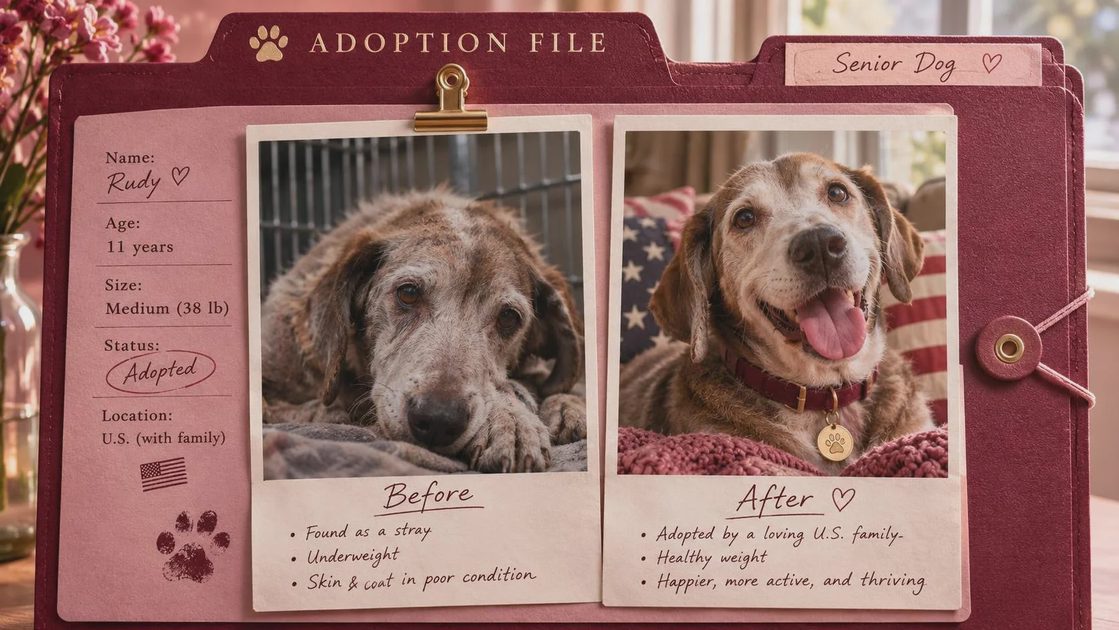
Senior dog adoption before and after: The first few days
Keep the welcome committee small. Bring your dog inside, show them where to rest and drink, and offer a low-key bathroom trip. Let them explore at their own pace rather than leading a house tour with everyone following behind. A dog who retreats under a table isn't failing to bond; they may simply need a little less happening around them.
Plan for more bathroom outings than you think you'll need, especially after waking and eating. Even a previously house-trained dog can have accidents in an unfamiliar place. Clean them without punishment and note patterns. Frequent accidents, straining, or changes in thirst deserve a conversation with your vet, particularly because older dogs can have medical issues that affect elimination.
Keep meals and walks predictable, but don't panic if the first day isn't picture-perfect. Ask the rescue what and when the dog has been eating, and make food changes gradually when possible. If your dog refuses food, call your veterinarian for guidance rather than assuming it's just nerves. Vomiting, extreme lethargy, trouble breathing, or an inability to urinate call for prompt veterinary advice.
Sleep can look different, too. Some dogs conk out; others pace or seem unsettled at night. Give them a comfortable spot near you if that helps, but don't force cuddles or pull them out of a hiding place. A closed door, a baby gate, or a little distance can be kinder than one more introduction.
What progress can look like over the next few weeks
The before-and-after comparison doesn't have to be dramatic to count. Maybe your dog starts choosing the same sunny patch every morning. Maybe they take treats more gently, follow you into another room, or settle while you make dinner. Those tiny, ordinary moments are often more useful than a posed adoption photo.
Take notes on appetite, bathroom habits, sleep, mobility, and anything that seems uncomfortable. A short daily record can help you see changes and give your vet useful details. Try not to measure your dog against somebody else's timeline. A dog who was sociable at the shelter may be reserved at home, while a quiet shelter dog may become more vocal as they settle in.
Introduce resident pets slowly, with separate resting and feeding spaces and supervision. For dogs, a calm outdoor meeting with enough distance to avoid crowding can be a starting point. With cats, use secure barriers and make sure the cat has an escape route the dog cannot block. Don't leave animals alone together until you're confident they can safely share space; some will need ongoing separation or professional guidance.
If your new dog growls when approached, don't punish the warning. Give them space and look at what was happening: Were they asleep, eating, or being touched somewhere sore? Pain and fear can both affect behavior. Talk with your vet and, when needed, a qualified reward-based behavior professional. If anyone is at immediate risk of being bitten, separate everyone safely and get professional help.
Health changes aren't always a simple glow-up
Schedule a veterinary appointment soon after adoption and bring the records you received. Ask about dental health, mobility, vision, hearing, medications, and any follow-up the rescue recommended. The vet can help distinguish normal adjustment from symptoms that need attention and suggest a care plan that fits your dog and your budget.
Some improvements may come from treating pain or an existing medical condition, not just from settling into a home. Other conditions will need ongoing management. An older dog may always need help with stairs or prefer short, gentle outings. That's not a failed transformation; it's useful information about how to make their life comfortable.
Before adopting, ask the rescue about known expenses and talk with a vet about likely ongoing care. Set aside what you reasonably can, and ask about payment options before an emergency if money is tight. It's okay to consider whether your household can meet a particular dog's needs.
When the match is harder than you expected
Adopter's remorse can show up alongside love. Interrupted sleep, medication schedules, and worry about an animal you've just met can make the first stretch feel enormous. Ask the rescue about its support and return policies, and reach out early if you're struggling. They may know the dog's history or be able to suggest resources.
Sometimes a home isn't safe or sustainable for a particular dog, even after thoughtful effort. Returning or rehoming through the rescue's agreed process can be a caring decision, not a moral failure. Every good dog was once someone's 'too much.' Your job isn't to produce a perfect after photo. It's to make the next kind, practical decision for both of you.
Letters
No letters yet. Yours could be the first.