Rehoming a senior dog can feel like admitting you failed, especially when you have loved that gray muzzle for years. It is not automatically a failure. Sometimes a family loses housing, a caregiver becomes ill, finances change, or the dog’s needs become more than one household can safely manage. The kindest choice is the one that protects the dog’s comfort and future, even when it breaks your heart.
I have helped with enough rescue animals to know that senior dogs are not disposable, difficult leftovers. They often arrive with excellent house manners, predictable routines, and a deep ability to bond. They also need more honest planning than a cute adoption post and a hopeful caption. Here is how to make the process safer and gentler for everyone.
Start with the real reason and the dog’s real needs
Before rehoming a senior dog, write down what is actually happening. “He is old” is not enough information for a potential adopter. Is he struggling with stairs? Does he wake at night? Does he need help getting into a car? Does he bark when left alone, guard food, dislike cats, or become confused in the evening? A clear description prevents a painful mismatch later.
Make two lists. The first should cover daily care: meals, medications, bathroom habits, sleep schedule, exercise, favorite resting spots, and how the dog handles grooming. The second should cover limits and risks: bite history, escape behavior, resource guarding, mobility trouble, separation distress, and triggers around children or other animals. A senior dog deserves a home that can handle the whole truth, not just the cuddly parts.
Do not punish yourself for writing difficult details. The right person needs them. A dog who cannot safely live with toddlers may thrive with a retired couple. A dog who needs three medications may be perfect for someone experienced with palliative or chronic care. Rehoming a senior dog works best when the match is based on daily reality rather than sympathy alone.

Get a veterinary picture before looking for a home
Schedule a veterinary appointment if you can afford one, even if the dog seems fine. Ask for an exam, a medication review, and guidance on pain, dental disease, vision, hearing, arthritis, and cognitive changes. Senior dogs commonly hide discomfort. A dog who appears “grumpy” may actually be sore when touched or frightened because he cannot hear someone approaching.
Request copies of medical records, vaccination history, test results, and prescriptions. Write down the veterinarian’s name, the pharmacy used, medication doses, and the monthly cost. If the dog needs a prescription such as carprofen, gabapentin, thyroid medication, or insulin, never send pills without clear instructions. Include the usual food brand and any diet restrictions. A realistic care budget might range from $40 a month for basic medication to several hundred dollars for ongoing treatment, depending on the dog’s condition.
If money is the reason you are considering rehoming a senior dog, ask the clinic about lower-cost options, payment plans, local assistance funds, or a rescue group that supports medical fosters. Rehoming may still be the right answer, but you deserve to understand every available path before making a permanent decision.
Choose a safe placement route
Start with people who already know the dog. A trusted friend, relative, neighbor, dog walker, groomer, or veterinarian may know an appropriate home. Personal networks are useful because someone can describe the dog from direct experience, but they are not automatically safe. Ask questions rather than handing the leash to the first person who sounds enthusiastic.
Breed-specific rescues, senior-dog programs, humane societies, and municipal shelters can also help. Contact several organizations and explain the dog’s age, health, behavior, and deadline. Some groups are full but can share a courtesy listing, provide a foster lead, or help with screening. Be honest if the situation is urgent. “I need placement by Friday” gives a rescue different information than “I am exploring options over the next month.”
Avoid advertising a senior dog as free to anyone who asks. A small adoption fee, a rescue screening process, or a carefully managed transfer can reduce impulsive decisions. Never meet an unknown adopter alone at your home. Use a public location, bring another adult, and keep the dog’s records with you until the placement is confirmed.
Screen for a home that fits the dog
Rehoming a senior dog is less about finding the fastest yes and more about finding the right routine. Ask where the dog will sleep, how long he will be alone, whether there are stairs, and who will provide care if the adopter travels. Ask about current pets, children, fences, landlord approval, and previous experience with older animals. If mobility is limited, a home with a single level and nonslip floors may matter more than a large yard.
Invite serious adopters to meet the dog more than once. A quiet first meeting can look very different from a busy home visit. Let the dog approach at his own speed. Watch how the person responds when the dog is slow, confused, stiff, or uninterested. Someone who laughs gently and adjusts is often a better fit than someone who insists the dog immediately love them.
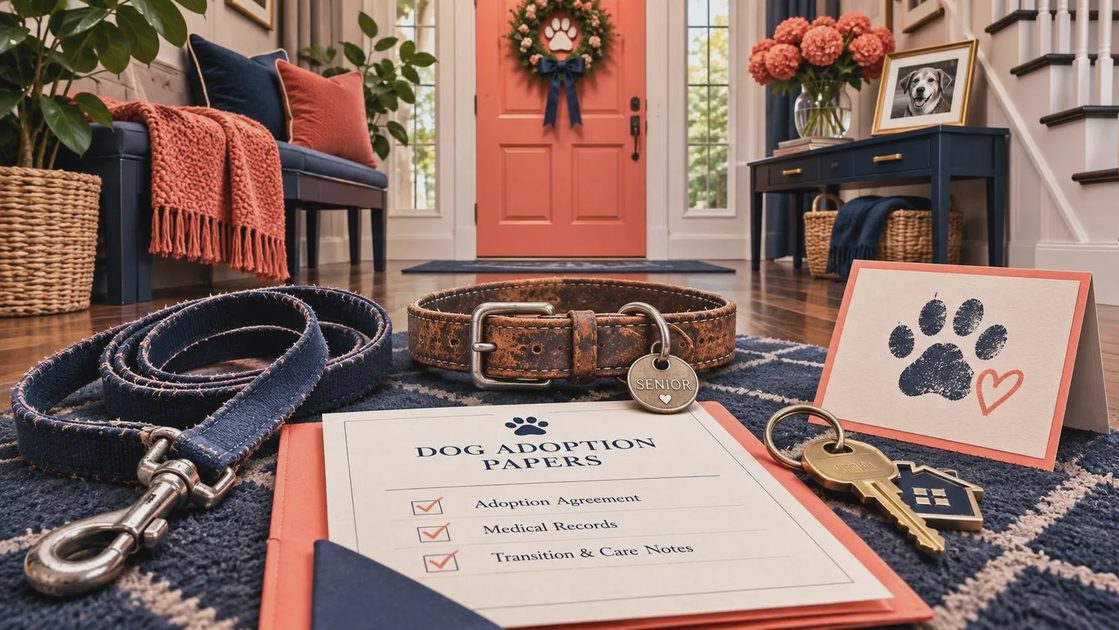
For rehoming a senior dog with medical or behavior needs, put the agreement in writing. Include the dog’s records, current food, medication schedule, emergency contact, and a promise to contact you or the rescue if the placement fails. Do not transfer ownership until you understand the rescue or adopter’s return policy. A backup plan is not pessimism; it is responsible rescue work.
Make the transition smaller and calmer
The handoff should be boring. Send familiar food, a blanket, a bed, medications, and a toy that smells like home. Write down the dog’s normal morning and evening routine. If he paces after dinner or needs a bathroom trip at 2 a.m., say so plainly. Small details can prevent a new caregiver from mistaking normal adjustment stress for a crisis.
Avoid a long, emotional goodbye if it makes the dog anxious. A calm transfer, followed by several quiet days, is usually kinder than repeated visits that keep reopening the separation. Ask the new caregiver for brief updates rather than demanding constant photos. A dog may sleep heavily, eat less, hide, or seem unsettled for the first week. Those changes deserve attention, but they do not always mean the placement is failing.
Stay available for practical questions. If the dog refuses food for an extended period, has trouble breathing, cannot stand, seems painful, or shows sudden confusion, the caregiver should call a veterinarian promptly. Senior dogs can decline quickly, and early help matters.
Let the choice be compassionate, not perfect
Sometimes rehoming a senior dog happens because the original family cannot provide safe care anymore. That truth can carry grief and relief at the same time. Both feelings are allowed. You can miss the dog and still know another home offers better access to medication, fewer stairs, or more companionship.
If you are the person considering adoption, remember that an older dog is not a guaranteed easy dog. Ask about pain, sleep, house training, handling, and end-of-life expectations. Find out whether you can manage a $200 emergency visit or a monthly medication routine. Senior adoption can be deeply rewarding, but it should be an informed yes, not a guilt-driven one.
Rehoming a senior dog is a major decision, yet it can also be an act of love. Tell the truth, prepare the next caregiver, and build a backup plan before the leash changes hands. Every good dog was once someone’s “too much.” With patience and honest matching, an older dog can still become someone’s favorite part of the morning.
Letters
No letters yet. Yours could be the first.