A senior dog foster can begin with a quiet ride home, a careful sniff of the living room, and one exhausted nap beside the couch. If you are considering opening your home to an older rescue dog, you do not need professional training experience or a perfectly calm household. You need patience, honest communication, and a willingness to notice small changes. I have fostered dogs who arrived with cloudy eyes, stiff hips, mystery habits, and absolutely no idea how to relax. The first night was rarely pretty, but it was usually meaningful.
Why foster an older dog?
Senior dogs are often overlooked because adopters imagine expensive medical bills, short timelines, or a dog who cannot learn anything new. Sometimes those concerns are real. An older dog may need medication, dental work, joint support, or more frequent bathroom breaks. But senior dogs also tend to offer information that puppies do not. Their personalities are often easier to read, their energy is more predictable, and many are grateful for ordinary comforts such as a soft bed, a regular meal, and someone who leaves a lamp on.
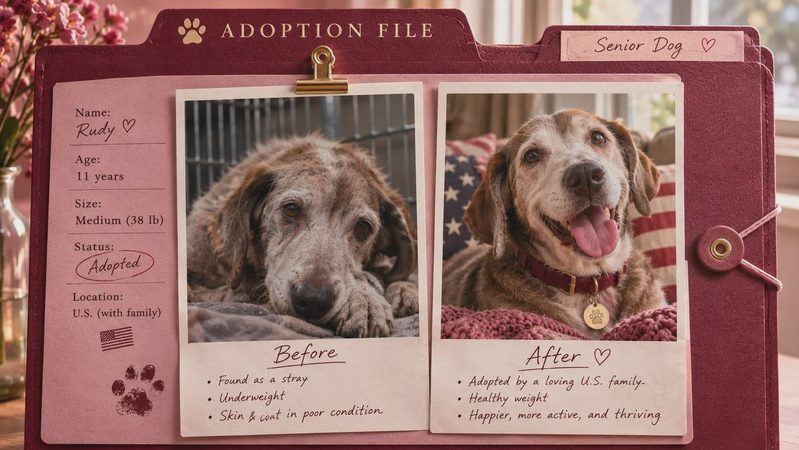
A senior dog foster also gives a shelter a chance to understand the dog outside a kennel. Staff may know that an animal is friendly, but a foster can discover whether he sleeps through the night, tolerates nail trims, rides in a car, or prefers to eat alone. Those details help the right adopter say yes. Your notes can be more valuable than a polished photograph.
Every good dog was once someone's "too much." Sometimes the dog was not too much at all; the home simply was not equipped for aging, illness, or a changed family situation. Offering a temporary landing place does not erase the past. It gives the dog a safer next chapter.
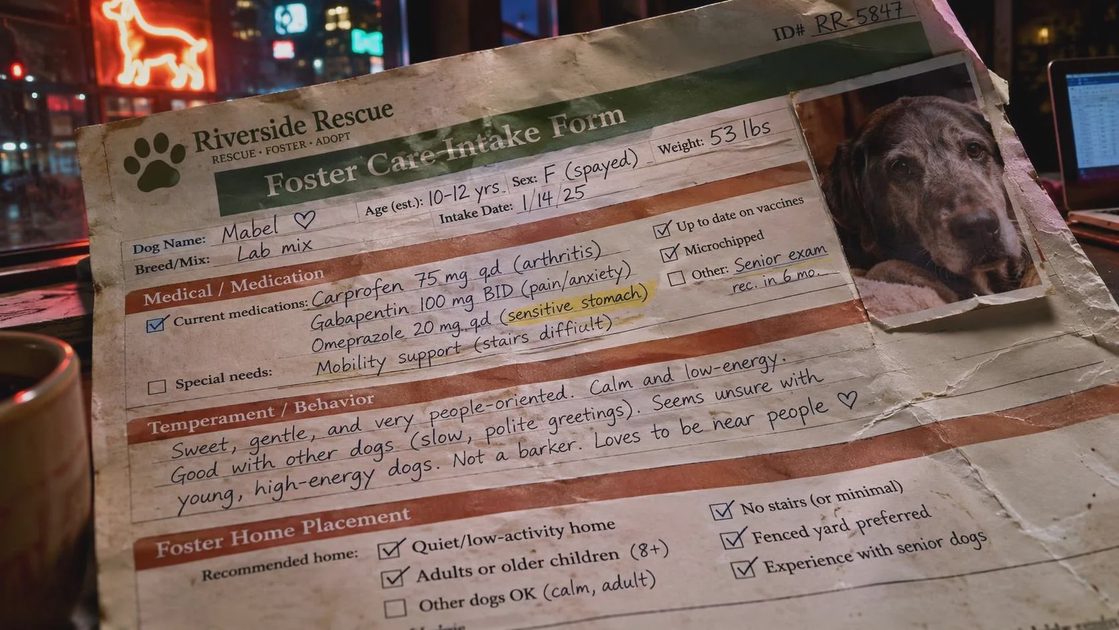
Prepare your home before pickup day
Start with one quiet room or gated area rather than granting immediate access to the entire house. A new dog may pace, hide, pant, or have an accident even if the shelter described excellent house manners. Put down washable blankets, a sturdy water bowl, and a bed that is easy to step onto. For a dog with arthritis, slick hardwood can be frightening, so inexpensive runners or yoga mats can create a path between the bed, water, and door.
Ask the rescue what food the dog currently eats, which medications are due, and whether there are known triggers. Keep resident pets separated for the first few days, then arrange short, supervised introductions. Cats need escape routes and elevated resting spots. Children need simple rules: do not hug a strange dog, take food, wake him, or climb onto his bed. A senior dog foster succeeds more often when everyone understands that quiet is part of the treatment plan.
Gather a leash, properly fitted harness, identification tag, waste bags, enzymatic cleaner, pill pockets, and a notebook. You do not need to buy an expensive orthopedic mattress immediately. A folded comforter and a $20 foam bath mat may be more useful while you learn what the dog actually needs.
The first two weeks are about observation
The first days are not an audition for perfect behavior. They are a decompression period. Keep walks short and predictable, use the same door for bathroom trips, and avoid crowded dog parks. Some older dogs sleep for most of the day after leaving a stressful shelter. Others become restless at night because their routine has changed or their joints hurt when they lie down.
Write down practical observations instead of vague labels. “Barks when the delivery truck stops” helps an adopter more than “has anxiety.” “Needs three minutes to stand after a nap” tells the rescue to ask a veterinarian about mobility. Record appetite, water intake, stool, sleep, medication times, and reactions to handling. If the dog suddenly refuses food, struggles to breathe, collapses, vomits repeatedly, or seems in severe pain, contact the rescue and a veterinarian promptly.
This is where a senior dog foster can make a real difference. You may notice that the dog is not stubborn; he cannot hear the cue. He may not be aggressive; he may be startled when touched on a painful hip. A night-light, a slower approach, or a ramp can change the entire picture.

Medical care and realistic expenses
Before accepting a placement, ask who pays for veterinary visits, prescriptions, emergency care, grooming, and supplies. Rescue policies differ. Get the agreement in writing, especially if the dog has heart disease, diabetes, seizures, dental concerns, or a mass that needs monitoring. Do not use human pain medication unless a veterinarian specifically instructs you; several common products are dangerous for dogs.
Routine costs can include $15 to $60 for monthly medication, $30 to $80 for a basic grooming appointment, and more for diagnostic testing or dental treatment. Those figures are planning ranges, not promises. A rescue may have a partner clinic, donated medication, or a reimbursement process. Asking early is responsible, not selfish. A foster who understands the care plan is less likely to feel trapped after an unexpected appointment.
Mobility support can be simple. Keep nails trimmed, place bowls at a comfortable height, and use a harness for stairs. Your veterinarian can advise on pain control, weight management, supplements, and exercise. Never assume every slow movement is normal aging; a treatable problem can hide behind that label.
Helping the right adopter find the dog
Good adoption writing is specific and kind. Explain that the dog likes slow morning walks, naps near people, and a quiet home. Say whether he can live with cats, tolerate visitors, use stairs, or remain alone for four hours. Mention the messy parts without turning them into a warning siren. “He has occasional nighttime accidents and wears a washable belly band” is useful information. “Not housebroken” leaves too much unanswered.
Take videos of ordinary moments: getting into a car, walking past a cyclist, meeting a calm dog, accepting a pill, or settling on a bed. Those clips help potential adopters picture daily life. Be honest about limitations, but also document progress. A dog who needed help standing on Monday may walk to the kitchen independently by Friday. That is not a miracle story; it is valuable evidence.
A senior dog foster should also ask applicants practical questions. Can they manage medication? Are there stairs? What happens during a workday? Is there a plan for future veterinary expenses? These questions are not an interrogation. They prevent a loving match from becoming an overwhelmed return.
When fostering feels harder than expected
You might feel irritated by accidents, tired from interrupted sleep, or guilty when you want your own routine back. That does not make you a bad foster. Compassion fatigue often arrives quietly, especially when a dog needs frequent cleaning or cannot be left alone. Tell the rescue before you reach a crisis. A volunteer may provide a weekend break, a crate, transportation, or a different placement.
You are allowed to decide that this dog is not a fit. Returning a foster through the rescue, with clear information and care, is not betrayal. Sometimes the right home is a quieter apartment, a person without stairs, or an adopter who has managed the same medical condition before. The goal is not to prove how much you can endure. The goal is to help the dog reach a safe, sustainable home.
If you do foster-fail, make the decision after the initial emotion settles. Compare your budget, schedule, resident animals, and long-term care plan. If you do not adopt, your work still matters. One senior dog foster can free a kennel, reveal a medical need, and give an older animal the dignity of being known as a whole dog rather than a shelter profile.
A simple plan for getting started
Choose a rescue with clear policies and responsive communication. Ask for the dog’s records, behavior history, medication schedule, and known restrictions before pickup. Prepare a contained resting space, remove hazards, and schedule a low-key first day. Keep a daily log for at least two weeks, send honest updates, and request help early when something feels beyond your experience.
Then notice the unglamorous wins. The first full meal. The first soft sigh on a clean blanket. The first walk without freezing at the doorway. The first night the dog sleeps without pacing. Those moments are the heart of a senior dog foster. You are not fixing every loss that came before you, and you do not have to promise forever. You are offering safety, information, and time. For an older dog, that can be the beginning of everything good that comes next.
Letters
No letters yet. Yours could be the first.