
I've fostered enough dogs to know which ones get applications and which ones sit. The puppies get snapped up before their photos even upload. The young, energetic ones go next, especially if they know a trick or two. Then there are the seniors—the gray-faced, slow-moving, nap-first dogs like Biscuit. When I walked into the shelter that Thursday and saw him curled against the back wall of his kennel, I knew exactly why he'd been there for six weeks. Adopting a senior dog is not the first choice for most people, and I understand why. But what I've learned from Biscuit is that the old ones have a way of giving you more than they ever ask for.
Biscuit was eleven years old, a deep brown mixed breed with a white muzzle, cloudy eyes, and a body that had clearly carried years of something heavy. His intake notes said he was surrendered when his owner went into assisted living. He hadn't barked since he arrived. He wouldn't take treats. He just curled tighter into himself, like he was trying to shrink away from the noise of the kennels around him. The shelter volunteer who let me meet him said, "He's a good one. He's just old." I heard the apology in her voice, but there was nothing to apologize for.
Why Senior Dogs Get Passed Over
The reasons people avoid senior dog adoption are the same ones that almost kept me from stopping at Biscuit's kennel. I thought about the vet bills. I thought about the shorter time we'd have together. I thought about whether I could handle another goodbye after so many rescue goodbyes. Those are real fears, and pretending they don't exist doesn't help anyone.
But here's what I've learned from fostering and adopting older dogs: you're not getting a shorter version of a puppy. You're getting a whole different experience. Biscuit didn't need me to teach him how to live in a house. He already knew. He didn't chew my shoes or bark at the mail carrier or need three walks a day. What he needed was a warm place, a consistent routine, and someone to sit beside while he slept. That's it.
The First Weeks: Slow and Steady
Biscuit came home with me on a Tuesday afternoon, and he did something no other dog I've brought home has done. He walked inside, sniffed the air, walked directly to the dog bed in the corner, and lay down. He didn't hide. He didn't pace. He just went to sleep. That was the most trusting thing I've ever seen from a shelter dog.

The early days of adopting an older dog look different than with a puppy. There's less training and more adjusting. Biscuit didn't understand the concept of toys at first. He looked at a rope toy like it was a suspicious object. He didn't play. He didn't zoom. He slept, ate, and followed me from room to room with a slow, steady pace that I eventually learned to match.
The Health Stuff Nobody Mentions
Within the first month, Biscuit had a dental cleaning, a senior blood panel, and a prescription for arthritis pain. I won't pretend those bills were small. They weren't. But I budgeted for them before I brought him home, because senior dog care is part of the deal. If you're considering an older dog, ask the shelter or rescue for medical records, and find a vet who understands geriatric pets. It helps to know what you're walking into.
Biscuit also has a heart murmur, which is common in older dogs. It sounds scarier than it is for him, but it means we do check-ups every six months. He doesn't mind the car ride. He mostly sleeps through the whole appointment.
The Rhythm of Old Dog Days
Our days settled into something quiet and predictable. Morning meds hidden in a spoonful of wet food. A short, slow walk around the block that takes twice as long as it should because Biscuit insists on sniffing every single bush. A long nap in the patch of sun that moves across the living room floor. Dinner, another short potty break, and then sleep until morning. He's not a project. He's a companion who just wants to exist alongside me.
What Biscuit Taught Me About Patience and Rest
Before Biscuit, I thought I understood rest. I was wrong. Biscuit doesn't rush through anything. He eats slowly. He walks slowly. He gets up from his bed like the floor is made of memory foam and he's not sure he wants to leave it. At first, I tried to encourage him to move faster. Then I realized the problem wasn't his pace. The problem was my insistence that everything needed to happen quickly.
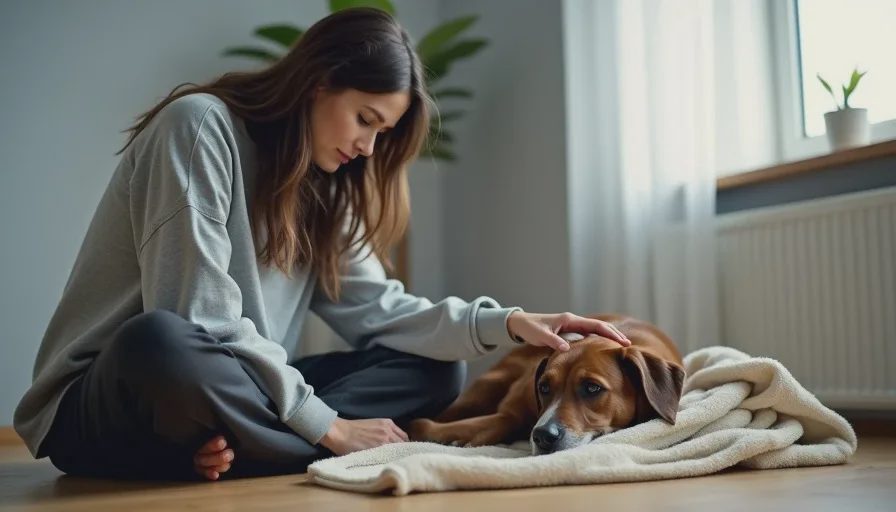
Adopting a senior dog has taught me more about slowing down than any book or therapy session ever has. Biscuit doesn't care about my to-do list. He cares that I sit down for ten minutes and scratch behind his ears. He cares that dinner arrives at the same time every day. He cares that the walk happens, even if it's just around the block. That's it. And in a world that constantly demands more, that's a gift.
What to Consider Before Adopting a Senior Dog
I don't believe in painting senior dog adoption as effortless. It isn't. Here's what I'd tell anyone thinking about it.
The vet budget is real
Older dogs often come with pre-existing conditions—dental disease, arthritis, lumps and bumps, organ function changes. Ask about them before you commit. A senior dog isn't a budget dog just because the adoption fee is lower. The care costs don't disappear; they shift.
The time you have matters more than the time you don't
Yes, you may only get a few years. With Biscuit, I don't know how many seasons we have left. But I know every single one of them matters. And he won't spend them in a shelter kennel. That alone makes it worth it.
You'll need to adjust your expectations
No high-energy hikes. No training milestones that look impressive on Instagram. The wins are smaller—a wagging tail when you come home, a clean vet visit, a nap in a sunbeam. But those wins are no less real.
The bond is different
Young dogs bond through play and training. Senior dogs bond through rest and routine. There's a quiet intimacy in sitting with an old dog while they sleep, knowing they finally feel safe enough to let their guard down.
A Love Letter to the Old Dogs
Biscuit is twelve now. He's got more white on his face than when I brought him home. His hearing isn't great, and he sleeps through the doorbell every single time. But he still greets me with a slow tail wag every morning, and he still follows me into the kitchen like he's supervising dinner. He is, without a doubt, the easiest, softest, most forgiving animal I've ever known.
If you're scrolling through rescue listings and you keep skipping past the seniors, I get it. I used to do the same. But the next time you see an eleven-year-old dog with a gray muzzle and sad eyes, ask yourself what you're really afraid of. Because if it's the goodbye, I understand. But let me tell you something: the hello is worth it.
Every good dog was once someone's "too much."
Biscuit was nobody's "too much." He was someone's everything, and then he wasn't. Now he's mine. And I intend to keep it that way for as long as he'll let me.


Letters
No letters yet. Yours could be the first.