
If there's one thing I hear more than any other from new adopters, it's this: "I thought by now he'd be over it." The "it" changes—the barking, the chewing, the pacing, the fear of doorways, the screaming when left alone. But the hope underneath is always the same: that time plus love will make the rescue dog behavior problems disappear. I used to believe that too. Then I spent six months cleaning up after a dog who panicked every time I walked to the mailbox, and I realized something important. Love doesn't fix a behavior problem. Understanding and management sometimes do. And sometimes the problem doesn't go away at all—it just becomes something you learn to live with, work around, and stop taking personally.
That's the part nobody posts on Instagram. The dog who still can't be crated after a year. The one who still lunges at the vacuum cleaner. The one who chews a baseboard every time there's a thunderstorm. We don't talk about those dogs enough, so adopters think they're alone. They're not. I've had more than thirty animals through this house, and almost every one of them carried some behavior that never fully went away. The difference is I stopped waiting for magic and started doing the real work.
What "Behavior Problems" Actually Look Like
When people say rescue dog behavior problems, they usually mean one of a few things: destruction in the house, excessive barking or whining, leash reactivity, separation anxiety, resource guarding, or fear-based reactions like cowering, snarling, or snapping. The label makes it sound like the dog is broken. What I've learned is that most of these behaviors are not flaws. They're strategies. The dog is doing the thing that kept them safe before, and they haven't figured out that the strategy no longer works here.
Waffles refused to walk on hardwood floors for almost a year. Not because she was stubborn. Because the shelter had concrete floors, and the first time her paws slipped on my kitchen floor, she panicked. The behavior was a fear memory, not a personality defect. Once I understood that, the problem stopped being "how do I make her walk on the floor" and became "how do I help her feel safe moving through this house." That shift changes everything.
The First Step: Rule Out Pain and Medical Issues
Before I label anything a "behavior problem," I take the dog to the vet. This is the step people skip, and I understand why—it costs money and time, and the behavior seems clearly emotional. But pain changes everything. A dog who snaps when you touch their hips might have arthritis. A dog who suddenly starts peeing inside might have a urinary tract infection. A dog who becomes aggressive around food might have dental pain.
I had a foster once who growled when I touched his collar. I assumed it was fear from being grabbed in the past. The vet found an old neck injury—probably from a too-tight collar or a yanked leash. We treated the pain, and the growling stopped within two weeks. The behavior was communication, not defiance. If I'd gone straight to a trainer, we would have been working on the wrong problem entirely.
When It's Fear, Not Stubbornness
A lot of rescue dog behavior problems are fear-based, especially in dogs who spent time in shelters or on the street. Fear looks like stubbornness if you don't know what you're seeing. A dog who refuses to go outside at night isn't being difficult. They're terrified of what they can't see. A dog who barks at strangers isn't protecting you. They're panicking and don't know what else to do.
The hardest part for adopters is accepting that fear takes longer than we want. You can't punish a dog out of fear. You can't love a dog out of fear. You can only create enough safe, predictable experiences that the brain slowly rewires itself. That process can take months. It can take years. And for some dogs, the fear never fully disappears—it just becomes quieter, more manageable, less likely to control their whole day.
The Hard Truth About Management
Here's the thing I wish someone had told me years ago: not every behavior needs to be fixed. Some behaviors just need to be managed. There's a difference, and it matters.
Waffles still won't walk on slick floors. We put rugs down. Problem managed. Biscuit guards his food bowl from the other dogs. We feed him in a separate room. Problem managed. Gravy couldn't handle the sound of the mail truck. He lives with someone now whose house sits far back from the road. Problem managed.
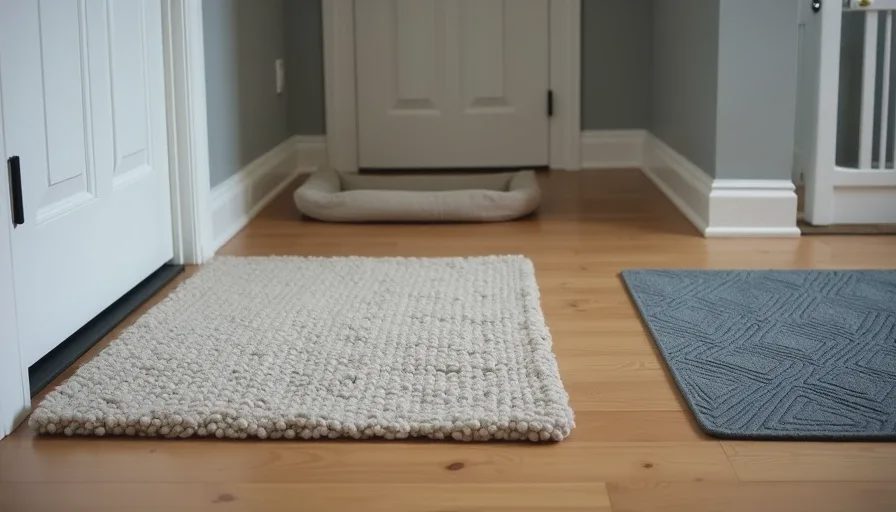
Management is not failure. It's the opposite. It's looking at the dog in front of you and saying, "I can't change this, so I'll change the environment instead." That's what a good trainer will tell you too. Not every battle is worth fighting. Some things are easier to prevent than to cure.
What I Do When Progress Stalls
When a behavior hasn't improved in weeks or months, I stop and ask myself a few questions.
Am I being consistent?
Dogs learn from patterns. If I allow the dog on the couch on Tuesday and yell at them for it on Friday, the behavior won't change because the rule doesn't exist. Consistency is boring, but it's the whole game. Pick a rule and stick to it, even when you're tired.
Am I asking too much too soon?
A dog who still can't handle a busy street doesn't need to walk past the school at pickup time. You're not pushing them to "get over it." You're flooding their nervous system. Back up to the level where they can succeed, and build from there.
Am I tracking the right thing?
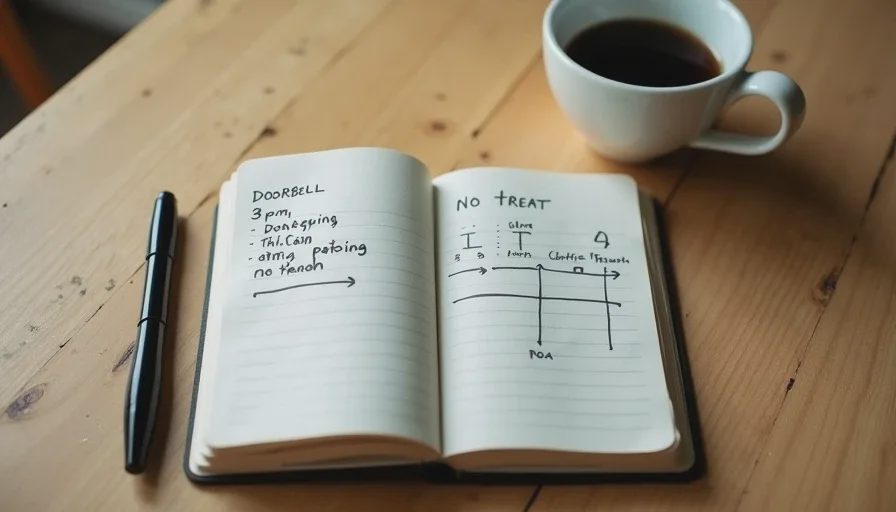
I keep a small notebook for dogs with ongoing issues. Not paragraphs—just notes. What triggered the behavior. What time of day. What the dog's body looked like before it happened. Patterns emerge that I'd never notice otherwise. The behavior that seems random often has a trigger I just wasn't seeing.
Have I asked for help?
I used to think I could handle everything myself. I was wrong. A qualified, positive-reinforcement trainer can see things you're too close to see. A veterinary behaviorist can assess whether medication might help. Asking for help isn't a failure. It's the most responsible thing you can do for a dog who's struggling.
A Note on Medication
I want to say this clearly because there's so much shame around it: medication for a dog with severe anxiety or compulsive behavior is not cheating. It's not "drugging your dog." It's giving a suffering animal relief. I've known dogs who couldn't learn a single thing because their panic was too loud—and once the right medication quieted the noise, they could finally take in the training they needed. Medication isn't a shortcut. It's a tool, just like a crate or a leash or a baby gate.
If a professional suggests it, don't let guilt make the decision for you. Let the dog's quality of life make the decision.
Living with the Dog in Front of You
The biggest shift in my rescue life came when I stopped comparing my dogs to an imaginary dog who had no problems. There is no such dog. Every single animal in this house has something—a fear, a habit, a trigger. And every single one of them is still worth it.
The dog who still barks at the doorbell is also the dog who curls up next to you when you're sick. The dog who still chews a shoe when it storms is also the dog who waits by the door when you come home. The behavior problems don't define them. They're just part of the package, same as the wagging tail and the warm head on your knee.
If you're living with a dog whose problems didn't disappear, I'm not going to tell you to just love them harder. I'm going to tell you to manage what you can, get help when you need it, and stop waiting for the day when everything is fixed. That day might not come. But there will be other days—small, quiet, unimpressive days when the dog lies down without being asked, or takes a treat from your hand, or falls asleep in the same room as the vacuum cleaner. Those days count.
Every good dog was once someone's "too much."
And some of them stay a little "too much" forever. That's not the worst thing in the world.

Letters
No letters yet. Yours could be the first.