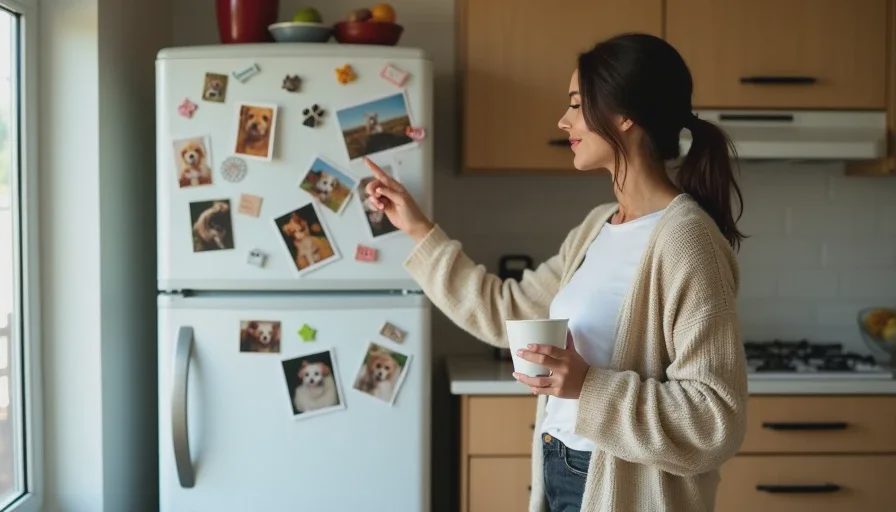
My refrigerator is a mess of magnets and memories. Every animal that has passed through this house—foster, permanent, or somewhere in between—gets a spot on the door. Some photos are blurry. Some are badly lit. But every single one tells the same story: before and after adoption moments that still stop me when I reach for the milk. These aren't just cute gotcha day photos. They're proof that change is possible, even when it's slow and unglamorous.
If you're new to rescue, you've probably seen the polished versions online—the side-by-side shots of a matted, scared dog next to a glossy, smiling one. Those images are powerful, but they can also be misleading. Real transformation rarely happens in a straight line. The 12 photos I keep on my fridge are the messy middle: the first tail wag, the first nap in the open, the first time a shut-down dog looked at me with something other than fear. They get old? Never. They get better.
Why Before and After Photos Hit Different in Rescue
When you're living with a new rescue dog, it's easy to feel like nothing is changing. The dog still hides. The accidents still happen. The leash still feels like a negotiation. That's when a photo can do what advice can't: show you the distance between day one and day thirty.
I didn't plan to document Waffles' first weeks. I snapped a picture on my phone because she finally came out from behind the toilet, and I wanted to remember it. Later, I put it next to a photo of her sprawled on the couch and cried a little. Not because she'd become a different dog, but because I'd forgotten how far she'd come. That's the quiet magic of rescue dog transformation photos—they remind you of progress your anxious brain has already filed away.
The Photos That Tell the Real Story
I pulled twelve photos off the fridge this week. Not the best ones, but the ones that still make me feel something. Here are a few of the stories behind them.
Waffles: From Bathroom Floor to Bed Hog
The first photo is Waffles huddled behind the guest bathroom toilet, one eye wide, body pressed flat. The second is her on my bed, on her back, all four legs in the air, snoring. There's a two-year gap between those images. Nobody posts the two-year gap. But that's the real timeline.
Biscuit: The Senior Who Just Needed to Rest
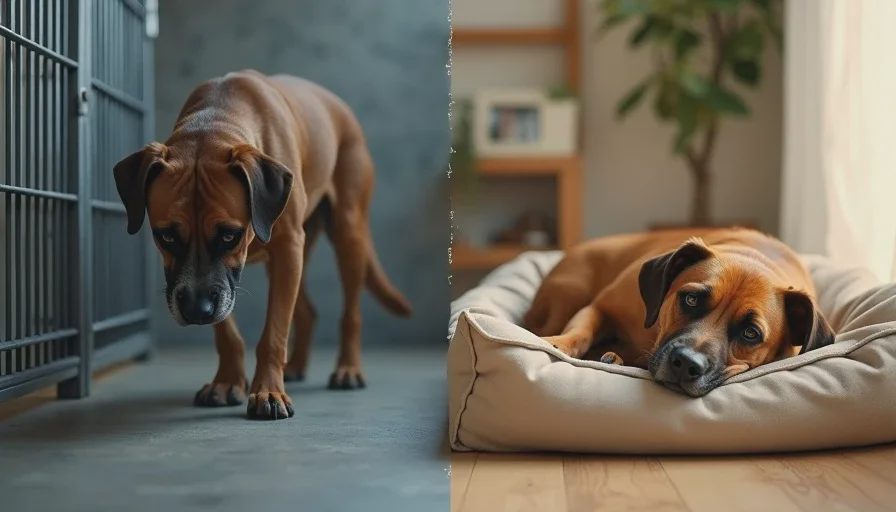
Biscuit arrived as an eleven-year-old with a gray muzzle and a body that seemed folded in on itself. The shelter photo showed him staring at a concrete wall. The photo I took two months later shows him asleep on a thrifted dog bed that's too small for him, but he refuses to give up. He wasn't transformed. He was finally allowed to be tired.
Gravy: The Foster Who Forgot How to Play
Gravy came to us as a six-month-old foster with ribs showing and no idea what toys were for. The first photo is him sniffing a tennis ball with suspicion. The second, taken a month later, shows him mid-air catching that same ball, mouth open, tail a blur. That second photo still makes me laugh because it took three weeks of rolling that ball across the floor before he even touched it.
Pancake: The Cat Who Purred for the First Time
Pancake, a skinny calico, spent her first week under the dresser. I have a photo of just her eyes glowing in the dark like tiny warning lights. The after photo is her on the windowsill, belly up, purring loud enough to hear from the next room. Cats often get left out of these narratives. They deserve their own before and afters too.
The Ones I Didn't Photograph
Some animals were so scared that pointing a phone at them felt like an invasion. I don't have before photos of every foster. And that's okay. Not every story needs documentation to be real.
What These Photos Don't Show
Here's the honest part: before and after adoption photos can accidentally suggest that the "after" is a finish line. It isn't. Waffles still startles at loud noises. Biscuit has bad days where he won't eat. Gravy chewed a shoe last week. The after photo is just a pause in a longer story.
If you're an adopter looking at these images and thinking, "My dog doesn't look that relaxed yet," please hear this: you're not failing. You're just in the middle. And the middle is where most of the actual work happens.
How to Take Gotcha-Day Photos That Help, Not Harm
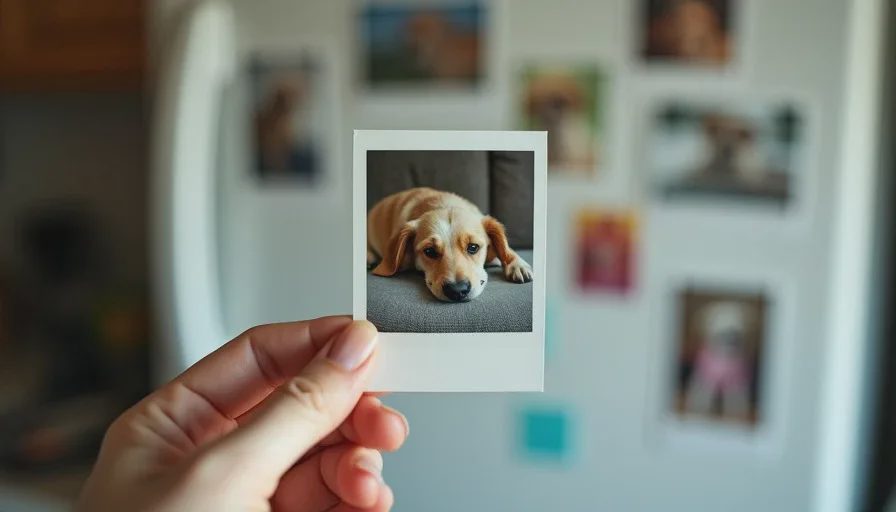
I've learned a few things about photographing new rescues without adding stress. These apply to fosters, adopters, and anyone who wants to capture the journey honestly.
Don't force the shot
If the dog is hiding or trembling, put the phone down. The best photos happen when the animal forgets you're watching. Waffles' couch-nap photo exists because I happened to be sitting there, not because I staged it.
Capture the small stuff, not just the big reveals
The first time a dog eats from your hand. The first time a cat stretches in the open. These are quiet milestones that later become your favorite before-and-afters. They don't look like much at the time, but they're everything.
Keep a consistent spot or angle
Not always possible, but if you can photograph the dog in the same corner or on the same bed over weeks, the comparison becomes striking. I wish I'd done this more. It's a simple habit that pays off later.
Avoid the sad-eyes shelter photo as comparison bait
Shelter photos exist to help the animal get noticed, not to become the "bad before" in a viral post. I never post a shelter photo next to a happy home photo if it might shame the people who cared for the animal before me. The point is growth, not judgment.
The Photo Wall That Keeps Me Going
On hard days—days when I've returned a foster or argued with a vet bill or wondered if this whole rescue life is too much—I stand in front of that fridge. I look at twelve photos that used to be twelve emergencies. A one-eyed dog behind a toilet. A senior too old for anyone. A foster puppy who didn't know how to play. A calico with glowing eyes in the dark.
And then I look at the photos beside them. The same animals, changed not by magic but by patience, routine, and a lot of unphotographed Tuesday afternoons.
Gotcha day photos never get old because they're not about perfection. They're about proof. Proof that the scared ones can settle. Proof that the "too much" ones can become family.
Every good dog was once someone's "too much."
The photos don't let me forget it.

No notes yet — write the first one.