The adopted dog first day can feel like a celebration, a sleepover, and a small emergency all at once. You have the leash, the new bed, a phone full of photos, and a dog who may be too frightened to look at you. Take a breath. Your job is not to create an instant best friend. Your job is to make the first few hours safe, quiet, and predictable.
I have brought home dogs who marched through the door as if they owned the place and dogs who flattened themselves behind the washing machine. Both reactions were normal for those animals. Rescue dogs do not arrive with a clear explanation of what happened before you met them. They need time to discover that the water bowl stays full and that your hands do not mean danger.
Prepare the house before pickup
The best adopted dog first day begins before the car leaves the shelter. Choose one small, low-traffic room or gated area as a landing zone. Put down a washable blanket, water, a few pieces of the food the dog already eats, and one safe chew. Remove electrical cords, medications, trash, children’s toys, and anything tempting enough to swallow. A crate can be useful if the door remains open and the dog can choose it; it should never become a surprise trap.
Buy a properly fitted collar and a backup identification tag, but do not rely on the collar alone. A frightened dog can back out of loose equipment in seconds. A secure harness and a standard six-foot leash are usually better for the first trip outside than a retractable leash. Keep a second leash near the door, because new-adopter brain is real and you will forget where you put the first one.
Ask the shelter or foster home what food the dog has been eating, when they last went outside, and whether they have shown fear around stairs, doors, cars, men, other animals, or handling. You do not need a perfect history. Even small details can prevent an avoidable scare.
What to do when you arrive
For the adopted dog first day, skip the neighborhood tour and the welcome party. Drive directly home, keep the radio low, and avoid stopping at a pet store unless you have no alternative. If another person is driving, one adult can sit quietly nearby without reaching over the dog. Some dogs drool, pant, vomit, or bark during the ride. That is stress, not a character review.
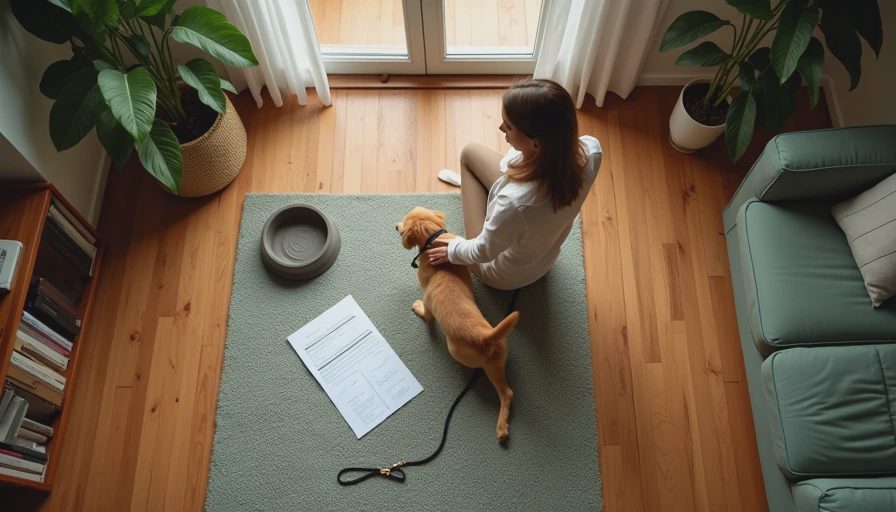
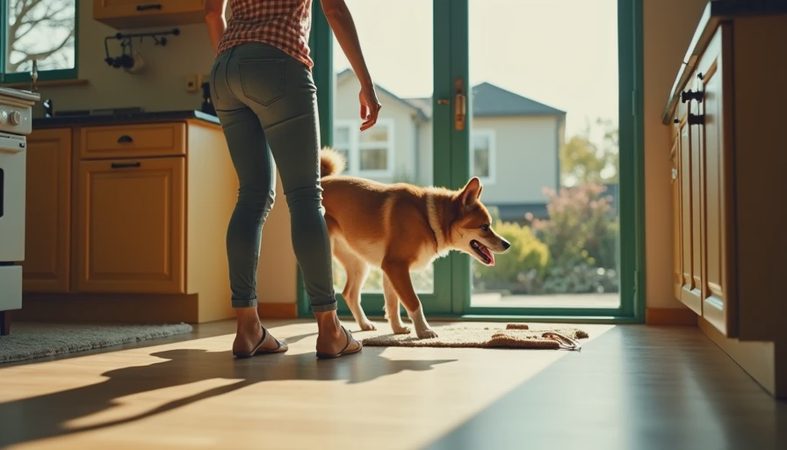
At home, take the dog to the potty area before opening the front door. Use the harness and leash even if you have a fenced yard. Close exterior doors, guide the dog inside, and let them investigate at their own pace. If they hide, sit several feet away and read or scroll quietly. Do not drag them out for a hug. If they approach, offer a relaxed hand and let them decide whether contact feels good.
Keep the first evening boring in the most helpful way. Serve a modest meal, provide water, and offer a bathroom break after eating, sleeping, and playing. A dog that refuses food may simply be overwhelmed. A dog that eats too quickly may need smaller portions. Sudden diarrhea is common after a major change, but repeated vomiting, severe lethargy, trouble breathing, or pale gums deserves prompt veterinary advice.
The first night may be rough
The adopted dog first day often ends with a dog who cannot settle. You may hear pacing, whining, panting, scratching, or repeated trips to the water bowl. Your new companion may also sleep for hours and then wake up confused. Neither pattern tells you whether the adoption will work. It tells you that the dog has had a very large day.
Place the sleeping area close enough that you can hear movement, but do not feel obligated to sleep on the floor. A baby gate can give the dog boundaries without making them feel shut away. Take them outside once before bed and again if they wake, using the same calm route. Keep lights dim and conversation quiet. If the dog has an accident, clean it without scolding. Stress and unfamiliar flooring can overwhelm even a house-trained adult.
That night, protect your own expectations. You might feel instant love, panic, guilt, or nothing much at all. Bonding is not a test you pass during the first evening. In my house, one foster named Pancake spent two days facing the wall. On day three, she carried a squeaky toy into the kitchen. That tiny, ridiculous entrance was more meaningful than any movie-style cuddle.
Food, potty breaks, and introductions
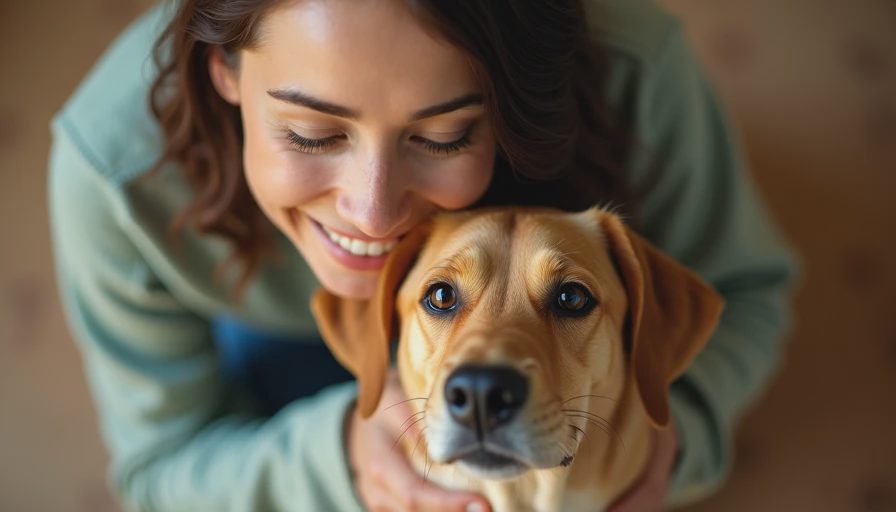
During the adopted dog first day, keep food and routines familiar whenever possible. Changing food immediately can create stomach trouble, while a consistent schedule helps the dog understand what comes next. Feed in a quiet spot away from other pets. Leave the bowl down for a reasonable period, then pick it up rather than allowing nervous grazing all day.
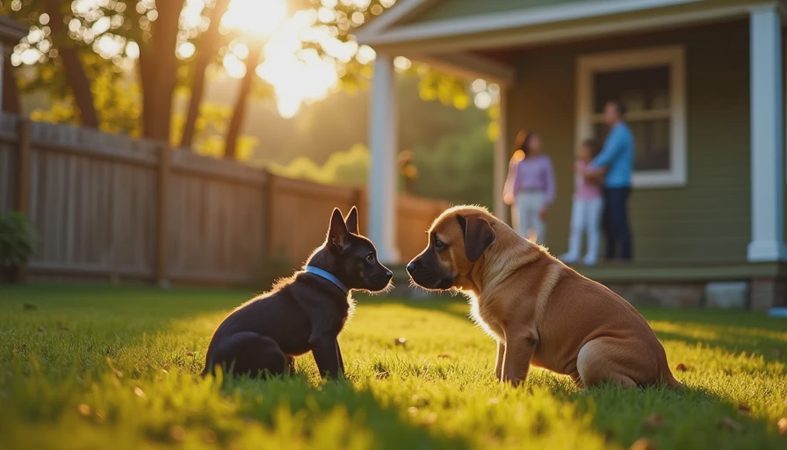
Do not introduce every family member, neighbor, and pet at once. If you have another dog, use a neutral outdoor area for a parallel walk with two handlers, then bring them inside after both dogs have relaxed. Keep cats behind a closed door or tall gate. A dog who seems friendly can still chase a cat when startled. Supervision is not pessimism; it is how you give everyone a chance to succeed.
Children should learn three rules immediately: let the dog come to them, never climb on or hug the dog, and leave the dog alone while eating or sleeping. Keep visits short. A calm five-minute interaction is more useful than an hour of excited attention.
What is normal, and what needs help
The adopted dog first day can include behaviors that look alarming but are often temporary: hiding, barking at ordinary sounds, refusing affection, gulping food, having an accident, or following you everywhere. Write down what you observe instead of trying to solve every behavior immediately. Patterns become clearer when you can tell a trainer or veterinarian exactly when something happened.
Some signs need faster action. Contact a veterinarian for repeated vomiting or diarrhea, inability to urinate, collapse, serious coughing, obvious pain, or wounds that were not explained at adoption. Schedule a routine exam soon, bring all shelter records, and ask about vaccines, parasites, dental health, spaying or neutering, and a safe timeline for dog parks or group classes.
If fear, guarding, separation distress, or aggression continues, get qualified help early. Look for a reward-based trainer who explains methods clearly and does not promise a perfect dog in a weekend. Avoid punishment for growling; a growl is useful information that the dog feels unsafe.
A gentle plan for the next week
After the adopted dog first day, repeat the same simple rhythm: wake up, potty break, breakfast, rest, a short sniff walk, and quiet time. Do not measure progress by cuddles. Measure it by practical wins: the dog drinks water, sleeps deeply, accepts a treat, looks toward you, walks through the doorway, or relaxes while you sit nearby.
Give the dog a decompression period before judging their full personality. Many animals become more energetic, playful, or opinionated once they feel secure. That can be wonderful, but it can also reveal chewing, jumping, barking, or a need for more exercise. Build changes gradually and keep a notebook for food, medication, bathroom habits, triggers, and victories.
There is no shame in finding the first week harder than expected. Responsible rehoming or asking the rescue for support is not moral failure, and neither is needing professional help. Still, give a safe, manageable routine a fair chance before making a decision based on one frightening night. Every good dog was once someone’s “too much.” On the adopted dog first day, you only need to show this one that tomorrow can be quieter.

Letters
No letters yet. Yours could be the first.