The first time I made homemade dog food slow cooker style, I was trying to tempt a newly adopted dog to eat after three stressful days in my house. The kitchen smelled like chicken and sweet potatoes, and the dog, a nervous little breakfast-named foster called Pancake, finally came out from behind the recliner. That was a win, but a warm bowl is not automatically a complete or safe diet. Homemade meals can be useful as a topper or short-term option, yet dogs need balanced nutrition, and some medical conditions require a specific veterinary diet.
Why a slow cooker can help a newly adopted dog
A slow cooker is practical when life already feels like a pile of adoption paperwork, potty accidents, and unanswered questions. It softens ingredients, lets you cook once for several meals, and creates a familiar smell that can help a stressed dog become interested in food. A homemade dog food slow cooker recipe can also be easier for dogs with missing teeth, sore mouths, or sensitive appetites because the finished texture is soft and moist.
The appliance is not magic, though. It does not make unsafe ingredients safe, and it does not balance protein, fat, vitamins, and minerals by itself. I use slow-cooked food as a small part of a routine unless a veterinary nutrition professional has formulated the entire recipe. For most healthy adult dogs, a spoonful mixed into a complete commercial food is a gentler starting point than replacing every meal overnight.
Begin with a quiet portion, especially if your rescue dog has had diarrhea, vomiting, or an unknown history. Sudden food changes can cause stomach trouble even when every ingredient is wholesome. Offer a small amount, watch stool and appetite for a day, and increase gradually. If a dog refuses food for more than a short period, seems painful, or becomes lethargic, call a veterinarian instead of trying to solve the problem with another recipe.
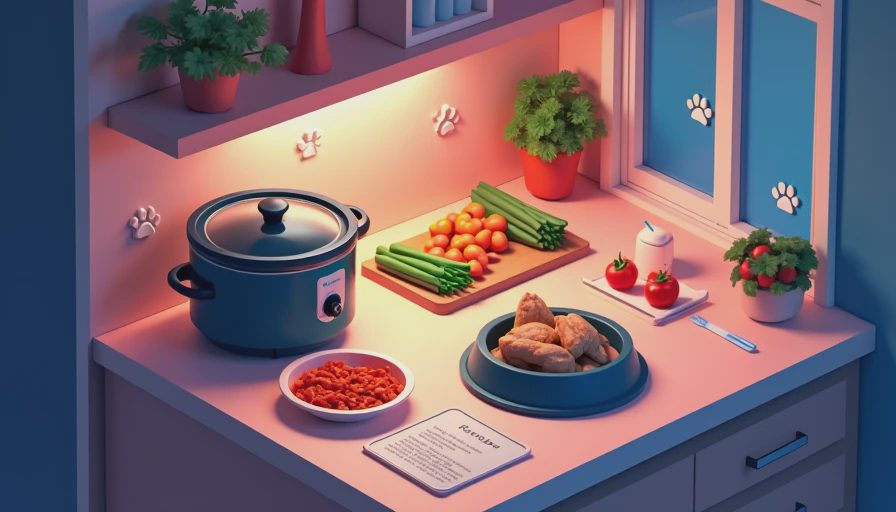
A simple homemade dog food slow cooker formula
For a basic batch, combine lean, boneless meat such as chicken breast, turkey, or lean beef with dog-friendly vegetables and a starch. Carrots, green beans, pumpkin, and sweet potato are commonly useful choices. Plain brown rice or white rice can provide energy, although some dogs do better with oats or potato. Add enough water to keep the ingredients covered and cook until the meat is completely done and the vegetables are tender.
Never add onions, garlic, scallions, chives, grapes, raisins, macadamia nuts, or xylitol. Skip salty broth, seasoning packets, butter, and sauces. Cooked bones are especially dangerous because they can splinter, so remove every bone before serving. I also avoid large amounts of fat, since greasy meals can trigger stomach upset and, in some dogs, pancreatitis.
A cautious starting ratio is mostly meat and starch with a smaller portion of vegetables, but this is not a universal prescription. Puppies, pregnant dogs, large breeds growing quickly, and dogs with kidney, liver, urinary, pancreatic, or allergy concerns have different needs. A homemade dog food slow cooker meal that works for my healthy adult mutt may be completely wrong for a senior with kidney disease.
How to make and portion the batch safely
Wash produce, thaw meat in the refrigerator, and keep raw ingredients separate from foods people will eat. Fill the slow cooker according to its manufacturer instructions rather than cramming it full. The finished meat should be fully cooked and easy to break apart. Stir everything well, then remove bones, tough skin, and any unusually large pieces before cooling.
Divide the food into shallow containers so it cools quickly. Refrigerate portions you will use within a few days and freeze the rest in one-meal containers. A silicone freezer tray is handy for small dogs, while labeled sandwich bags work for larger portions. Write the date on each container; rescue-household refrigerators get chaotic quickly when there are medications, training treats, and somebody's forgotten takeout competing for space.
Serve the food lukewarm or at room temperature, never steaming hot. Measure the amount rather than letting a dog graze from the container. Calories can climb quickly when meat, rice, and commercial food are combined. A homemade dog food slow cooker batch should be treated like prepared food for people: use clean utensils, refrigerate promptly, and discard anything that smells sour, looks slimy, or has sat out for several hours.

Making homemade meals nutritionally responsible
The biggest mistake I see is assuming that meat, rice, and vegetables cover every nutritional requirement. Dogs need more than calories. Calcium, essential fatty acids, trace minerals, and several vitamins can be missing from an improvised recipe. Meat-heavy meals can also create an unhealthy calcium imbalance, especially for growing dogs. Do not toss in human multivitamins or calcium powder based on a guess; excesses can be harmful too.
If you want fully homemade feeding, ask your veterinarian for guidance or use a recipe created by a board-certified veterinary nutritionist. Follow it exactly, including supplements and preparation instructions. Ingredient swaps can change the nutrition substantially. Replacing turkey with fatty beef, or leaving out a supplement because the jar is empty, turns a carefully designed diet into a different diet.
For many adopters, the most realistic approach is complete-and-balanced dog food as the foundation, with a measured homemade portion as a topper. This gives a dog the nutritional structure of a commercial diet while adding smell and variety. A homemade dog food slow cooker recipe can be especially useful during the first weeks of settling in, when a familiar meal helps create a predictable feeding ritual.
A rescue-dog example from my kitchen
When Waffles came home, she ate too quickly, then acted as though every bowl might be her last. I used a small amount of soft food over her regular diet, fed her behind a baby gate, and kept meals boring and consistent. The food helped, but the schedule and quiet space mattered just as much. Another foster, Biscuit, had loose stool after changing homes, so I stopped experimenting and asked the rescue's veterinarian for direction.
That is the part recipe posts often skip: food cannot fix fear, dental pain, parasites, or a serious illness. It can support a routine while you address those problems. Introduce one new ingredient at a time when possible, keep a note of stool quality and itching, and avoid changing food, treats, chews, and supplements all in the same week. Otherwise, you will not know what caused the reaction.
When this approach is not the right fit
Skip homemade meals as a do-it-yourself treatment for repeated vomiting, bloody stool, unexplained weight loss, severe itching, or a dog that will not drink. Puppies and dogs with diagnosed medical conditions deserve professional nutrition advice before you make a recipe their main food. Ask about calorie needs too: a tiny terrier and a ninety-pound shepherd can eat dramatically different portions of the same batch.
For a healthy adult dog, start small and keep expectations modest. The goal is not to become a pet-food chef or prove your devotion through complicated meal prep. The goal is a safe, sustainable routine that your dog can tolerate and you can actually maintain during a hard adoption week. Every good dog was once someone's "too much," and sometimes the kindest care is a simple bowl, a vet's advice, and one manageable day at a time.


Letters
No letters yet. Yours could be the first.