Separation anxiety in rescue dogs can make the first weeks feel impossible. You leave for groceries and return to a shredded doorframe, a puddle on the floor, or a dog who sounds genuinely panicked behind the door. I have lived through that particular knot in the stomach more than once. It is exhausting, but it is not proof that you adopted the wrong dog or failed at being a good adopter.
A rescue dog may have experienced sudden loss, several homes, kennel stress, neglect, or simply a lifetime without learning that people leave and come back. The behavior is usually fear, not revenge. Every good dog was once someone's "too much," and sometimes the first job is showing them that ordinary departures are safe.
What separation anxiety can look like
The obvious signs include barking, whining, howling, scratching at exits, chewing door trim, digging at carpet, escaping a crate, or urinating indoors only when left alone. Some dogs pace, pant, drool, tremble, refuse food, or press their bodies against the door. Others become quiet and freeze, which can be missed because there is no dramatic destruction.
Use a phone or inexpensive indoor camera to learn what happens after you leave. A dog who settles after five minutes has a different problem from a dog who escalates immediately and never rests. Do not use the camera to punish or scold after the fact. It is simply information that helps you set a starting point.
Also separate separation distress from boredom, incomplete house training, noise fear, or confinement anxiety. A dog who destroys a stuffed toy after an hour may need exercise and better enrichment. A dog who panics when the crate door closes but relaxes loose in the kitchen may not fear being alone; the crate itself may be the trigger. That distinction changes the plan.

Build safety before practicing absences
For separation anxiety in rescue dogs, management is not cheating. It prevents your dog from rehearsing panic while you build new skills. If possible, arrange a friend, neighbor, dog walker, sitter, or daycare for unavoidable long absences during the early stage. A sitter does not need to entertain the dog all day. Calm company and a bathroom break can be enough.
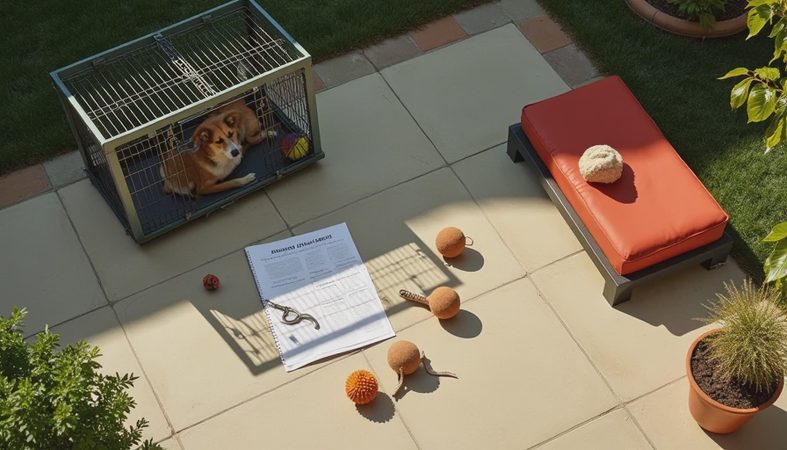
Create a comfortable home base, but do not assume a crate is automatically the answer. Some dogs feel secure in a crate; others injure themselves trying to escape. Try a gated kitchen, bedroom, exercise pen, or dog-proofed living room. Remove medications, cords, trash, and anything that could be swallowed. Close blinds if outside movement causes barking, and use a fan or soft music to cover hallway sounds.
Keep departures boring and predictable. Offer a sniff walk, water, and a safe food toy well before you pick up your keys. Then leave without a long emotional speech. A frozen food-stuffed rubber toy, lick mat, or scatter of kibble can give the dog something calming to do, but food is not a magic cure if fear has already taken over.
Practice tiny, successful departures
The heart of separation anxiety in rescue dogs training is staying under the panic threshold. Begin with a departure so short that your dog remains relaxed. That might mean stepping outside for ten seconds, returning, and sitting down without making a celebration. Repeat several times, then try twenty seconds later. Progress is measured in calm repetitions, not dramatic endurance tests.
Practice departure cues separately. Pick up your keys and put them down. Put on your coat and make coffee. Open the door, step through, and return. These exercises teach your dog that keys, shoes, and a doorknob do not always predict a long absence. Change the order occasionally so the routine does not become another warning signal.
Increase time in small, uneven steps. A useful session might be ten seconds, fifteen seconds, eight seconds, twenty seconds, and twelve seconds. That variety prevents the dog from expecting a steadily rising countdown. If barking, frantic scratching, heavy panting, or refusal of a favorite treat appears, the interval was too difficult. Return to an easier duration next time.
Do not leave for an hour to "teach independence." For a frightened dog, that can strengthen the belief that nobody returns. Progress may look boring: one week of successful thirty-second absences is still real progress. Keep a simple notebook with the duration, environment, and behavior so one difficult day does not erase the wins you have already made.

Help your dog learn independence while you are home
Separation anxiety in rescue dogs often improves when the dog has more than one way to feel secure. Reward your dog for resting on a mat several feet away while you read or wash dishes. Walk briefly into another room and return before the dog follows. Close the bathroom door for a few seconds. These ordinary moments teach distance without the pressure of a full departure.
Give affection freely, but avoid making constant contact the only source of comfort. If your dog shadows you, toss a treat onto a bed and praise the choice to settle there. Rotate safe enrichment such as a snuffle mat, cardboard box with supervision, a chew approved for that dog, or a short scent game. Physical exercise matters, yet an exhausted dog is not necessarily a confident dog. Calm sniffing and predictable rest are valuable too.
Keep the daily rhythm steady during the early adjustment period. Meals, walks, naps, and practice sessions do not need to happen at the exact minute, but a recognizable pattern can reduce uncertainty. If another person in the home can handle feeding or walking, let the dog build trust with them as well. Independence grows from several safe relationships, not forced isolation.
When professional help is the kind choice
For severe separation anxiety in rescue dogs, contact a veterinarian and a qualified behavior professional early. A dog who breaks teeth, tears nails, escapes through windows, stops eating, or cannot remain calm for even a few seconds needs more than internet tips. A veterinarian can check for pain or medical issues and discuss whether medication could support behavior work. Medication is not a failure; it can lower panic enough for learning to happen.
Look for a trainer who uses reward-based methods and has specific experience with separation cases. Ask what happens if the dog barks, whether they use shock or intimidation tools, and how they measure progress. Be cautious of anyone promising a guaranteed fix, recommending punishment, or telling you to ignore extreme distress. A good professional will ask about your schedule, housing, dog history, camera observations, and safety setup.
Give yourself a workable adoption plan
Living with separation anxiety in rescue dogs can affect work, sleep, finances, and relationships. Make the plan realistic rather than heroic. Price a weekly dog walker, ask whether your workplace allows occasional remote hours, trade sitting with a trusted friend, or arrange short visits instead of paying for all-day care. A $20 to $35 walk can be less expensive than replacing a damaged door, and it is usually kinder than repeated panic.
Set a review point after a few weeks of consistent management and training. Ask whether absences are getting longer, recovery is faster, and the dog is eating or resting more normally. If progress is flat, change the plan with professional guidance. If your housing, job, or health makes the situation impossible, humane rehoming through the rescue is not a moral failure. Honest help protects both the dog and the person caring for them.
You do not need a perfect first month. You need safety, patience, useful information, and enough support to keep going. The quiet return from the mailbox, the first nap while you shower, and the first calm grocery trip all count. That is how trust is built: one uneventful departure at a time.


Letters
No letters yet. Yours could be the first.