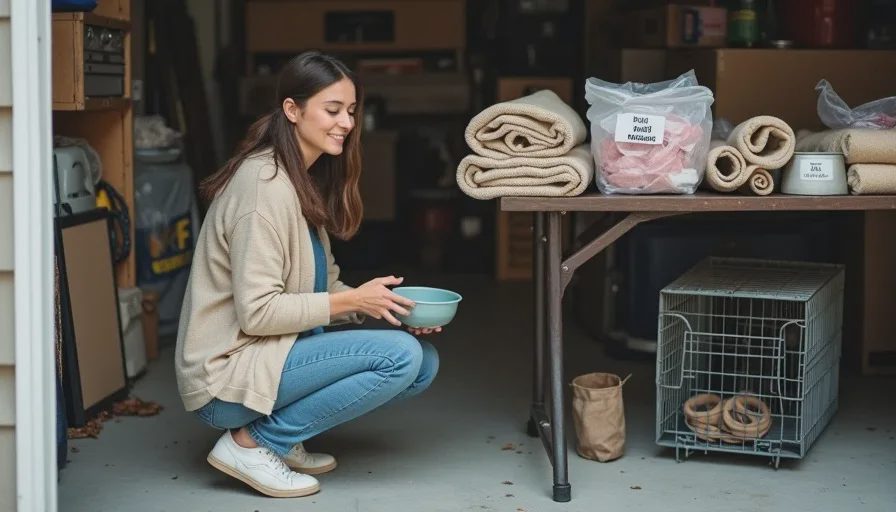
I'm not going to pretend I don't spend money on my animals. I spend plenty—on food, on vet visits, on the occasional emergency that makes my bank account wince. But when it comes to the stuff—the beds, the crates, the bowls, the cat trees—I almost never buy new. Not because I'm cheap, but because I've learned that thrifted pet gear can be just as good as the boutique version, sometimes better, for a fraction of the price. And in a house with four dogs and three cats, that fraction adds up fast.
The secret isn't really a secret. It's estate sales. Those quiet Saturday morning sales in older neighborhoods, where the tables are set up in the garage and the whole life of a household is spread out for strangers to sort through. I've found estate sale pet supplies in every room you can imagine—leashes hanging on a hook by the back door, ceramic food bowls under the kitchen sink, a barely used crate folded in the basement. The pets of that house are usually gone or rehomed, and their things remain, waiting for someone to see the value.
Why Estate Sales Beat Pet Stores
I used to think budget pet supplies meant waiting for a clearance sale at a big-box store. Then a friend dragged me to an estate sale in a neighborhood full of old houses, and I found a solid wood dog crate for twelve dollars. The same crate new would have cost over a hundred. That was the moment I understood: pet gear is one of those things people buy, use lightly, and then leave behind. And because it's often too bulky to sell online, it ends up on a folding table with a price tag that's practically an afterthought.
Estate sales are different from thrift stores in one important way: the items usually come from a single household. That means you can sometimes find a matching set—a dog bed and food bowls and a leash that all belonged to the same animal. The quality is often higher than what you'd find at a generic thrift store, because the person who lived there had the money and the taste to buy well in the first place. And when an estate sale company just wants the garage cleared out, they'll price a lot of this stuff to move.
What I Look For (And What I Leave Behind)
I've developed a mental checklist over the years. Not everything at an estate sale is worth taking home, even if it's cheap. The trick is knowing what can be cleaned, what can be fixed, and what's better left on the table.
Solid beds and cushions
Dog beds are my favorite find. I look for beds with removable covers, preferably machine-washable. I've found high-quality orthopedic beds for large dogs at estate sales for under twenty dollars—the kind of bed that costs triple that new. I check the zipper, the seams, and the stuffing. If the cover can come off and the foam inside isn't crumbling or stained through, it's usually worth the trip.
Biscuit, my senior dog, sleeps on a bed I found at an estate sale two years ago. It's a little faded, and the cover has a small patch on one corner, but it's the only bed he's ever chosen on his own. I washed the cover twice, let the foam air out in the sun for a full day, and it's been his ever since.
Crates and carriers
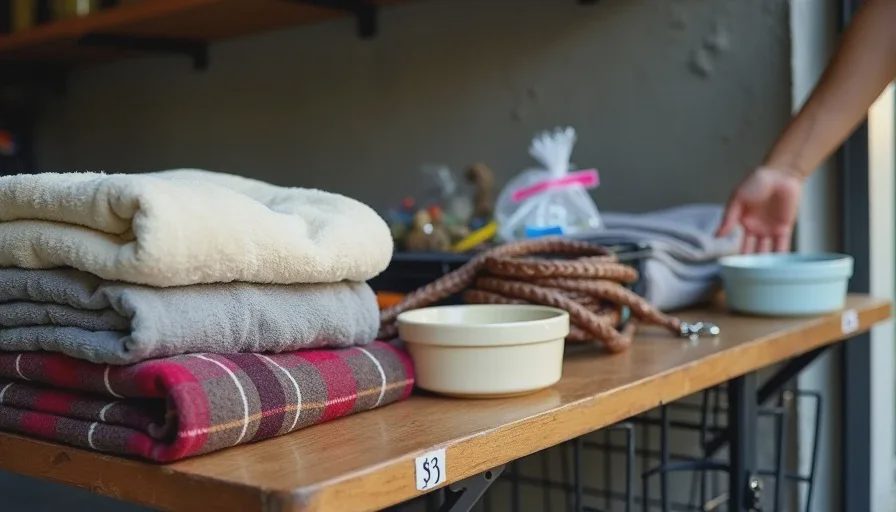
Crates are one of the best things to buy secondhand, because they're usually barely used. A dog who was crated for the first few months and then allowed to roam free leaves behind a crate that's practically new. I inspect the welds, the door latch, and the plastic tray in the bottom. If the tray is cracked, I still consider it, because replacement trays are cheap and easy to find.
I currently own three crates, and two of them came from estate sales. One was still in its original box in a basement, never assembled. The other was set up in a spare bedroom with a blanket still inside, which I washed and kept. The blanket was a bonus.
Ceramic and stainless bowls
I don't love plastic bowls, but I'll always grab a ceramic or stainless steel bowl if the price is right. These are easy to sanitize in the dishwasher or with a bleach solution. I've found matching sets of heavy ceramic bowls that look like they came from a boutique, marked at a dollar each. The cats get the shallow ones; the dogs get the deep ones. No one has ever complained about a secondhand bowl.
Leashes, collars, and harnesses
This is the one area where I'm more cautious. A leash or collar that's frayed or has a damaged buckle isn't worth the risk—a sudden break on a walk can be dangerous. But a well-made leather leash or a barely used harness in good condition? That's a different story. I inspect the stitching, the hardware, and the material. If it looks like it's been chewed, I pass. If it looks like it was bought for a dog who never wore it, I'll take it home and give it a good cleaning.
What I Skip, Even at a Good Price
Not all secondhand pet gear is a good idea. I've learned to leave certain things behind no matter how cheap they are.
Anything porous that can't be cleaned
This includes some toys, especially plush toys with no removable cover. If a stuffed toy has been chewed and slobbered on for years, no amount of washing makes me feel good about handing it to my dogs. I do make an exception for toys that are still in their original packaging or that look genuinely unused. Otherwise, the toy bin at home is filled with new or homemade options.
Used food or open treats
This might seem obvious, but I've seen open bags of kibble and boxes of treats on estate sale tables. It's not worth the risk. Food has expiration dates and storage conditions I can't verify. My animals eat well, but they eat fresh.
Medicines and supplements
I never, ever take these secondhand. Even sealed packages. Prescription or not, it's not worth the gamble. A dollar saved on glucosamine chews isn't worth an emergency vet visit because the bottle was stored in a hot garage for two years.
Chewed or damaged soft items
If a bed has been heavily chewed, the stuffing is exposed, or the cover is full of holes, I pass. One of my dogs once found a gap in a thrifted bed and pulled out half the filling before I noticed. That was a thirty-minute cleanup I don't need to repeat.
How I Clean Everything Before It Comes Inside
The most important part of thrifting for pets is not the finding. It's the cleaning. I don't bring anything into the house until it's been inspected and sanitized. Not because I'm paranoid, but because I have seven animals with seven different immune systems, and I'd rather not introduce something avoidable.
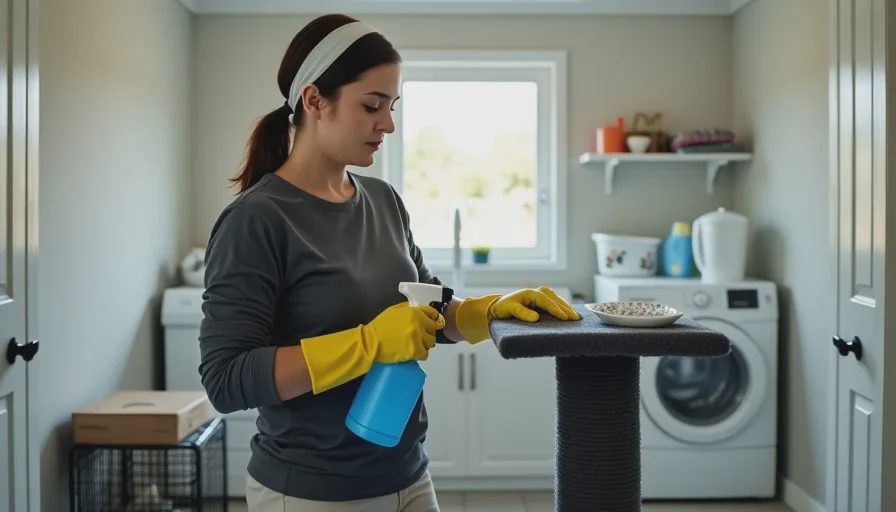
My routine is simple. Fabric items—beds, blankets, crate covers—go straight into the washing machine on hot, with unscented detergent and an extra rinse. I dry them on high heat or hang them in direct sun, which does a surprisingly good job of freshening and disinfecting. Hard surfaces—bowls, crates, plastic trays—get scrubbed with hot soapy water, then wiped down with a diluted bleach solution or a pet-safe disinfectant. I let everything air dry completely before it's allowed near the animals.
For items that can't be machine washed, like a cat tree with carpeted platforms, I vacuum first, then spray with a pet-safe enzyme cleaner and let it sit. If the fabric is removable, even better. Some of my best finds have needed a little elbow grease, but the result is gear that feels as clean as anything from a store.
A Few Practical Tips for Estate Sale Pet Shopping
If you want to start finding cheap pet gear this way, here's what I'd tell you to do.
Go early on the first day
The good stuff goes fast. I'm not a morning person, but on estate sale Saturdays, I set an alarm. The first hour is usually when the best items are still there. By Sunday, most things are marked down, but the selection is picked over.
Bring cash and a tape measure
Cash because not every sale takes cards. A tape measure because you need to know if that crate will fit in your car, or if the dog bed will actually fit in the corner you have in mind. I've brought home more than one item that was bigger than I thought.
Check the garage and basement
Pet stuff often ends up in the places people don't bother to display nicely. The garage hooks, the basement shelves, the mudroom corner. I've found some of my best items in dusty corners where no one else bothered to look.
Don't be afraid to ask
Estate sale workers usually know the story of the house. I've asked, "Was there a pet?" and gotten answers that helped me understand what I was looking at. Sometimes they'll tell you the dog's name, or point to a box of supplies in the back. The conversation is half the fun.
The House That Thrift Built
My home is not a showroom. The dog beds don't match. The cat tree looks like it's been through a few lives. The food bowls are a mismatched collection of ceramic and stainless, some of them older than my marriage. But every piece has a story, and every piece was chosen because it worked, not because it was new.
The animals don't care where their things came from. They care that the bed is soft, the bowl is full, and the cat tree doesn't wobble when they jump on it. I've given them all of that for less than the cost of a single boutique dog bed, and I've had fun doing it.
If you're on a budget, or if you just like the idea of giving something a second life, check out the next estate sale in your neighborhood. Look in the corners. Check the basement. Ask about the pets. You might come home with a crate, three blankets, and a ceramic bowl that some old dog once loved. And then your own pack can love it next.
Every good dog was once someone's "too much."
And every good piece of pet gear was once someone else's. That's not a downgrade. That's a second chance.


No notes yet — write the first one.