
I have a problem with dog books. My nightstand has a stack, my car has a paperback in the glove box, and the bathroom windowsill holds a few pages I keep meaning to finish. So when people ask me for books for first-time dog adopters, I don't hand them a list of twenty titles. I hand them the three or four books that actually changed how I live with dogs. The ones with cracked spines and coffee rings. The ones I've bought again after lending them out and never getting them back.
Here's the thing about dog adoption books: most of them are fine, but many of them are written for people with puppies, not for people bringing home a terrified adult mutt from the county shelter. The first book I ever bought was a puppy training guide that told me to be the "pack leader." I didn't need a pack leader. I needed someone to explain why my one-eyed dog had been hiding behind the toilet for five days. That book didn't help. These ones do.
The Book I Give to Everyone, No Matter the Dog
If I could only put one book in the hands of every new adopter, it would be Patricia McConnell's Love Has No Age Limit: Welcoming an Adopted Dog into Your Home. It's thin—less than a hundred pages—and that's exactly why it works. When you've just brought a dog home and you're running on four hours of sleep, you don't need a four-hundred-page textbook. You need something you can read in one sitting and use by dinner.
McConnell wrote this one specifically for people who adopt adult dogs. She doesn't assume your dog is a blank slate. She assumes your dog might be scared, confused, and unfamiliar with living indoors. And she assumes you might be anxious too. Every chapter is short, practical, and grounded in the kind of realism that made me feel less alone during Waffles' first week. If you only buy one book from this list, make it this one.
The Book That Taught Me to Read Dogs
Turid Rugaas's On Talking Terms with Dogs: Calming Signals is not a training manual. It's a language guide. It teaches you to see the small signals dogs use to calm themselves and others—the lip licks, the yawns, the head turns, the slow blinks. These are the signals shelter dogs use constantly, and most humans miss them entirely.
I read this book about five years into rescue, and it changed how I run meet-and-greets. Before, I thought a yawning dog was tired. Now I know a yawn can mean "I'm uncomfortable, please give me space." When I see a dog turn their head away from a potential adopter, I don't push them closer. I ask the adopter to back up and wait. That single shift has prevented more bad matches than any other thing I've learned.
For a first-time adopter, this book is like getting subtitles for a movie you didn't know you were watching. It's short, illustrated with photos, and incredibly useful during the first thirty days when your new dog is speaking a language you don't yet understand.
The Book for When You're Ready to Train Without Force
A lot of new adopters want to know when to start training. The answer is usually later than you think—first comes decompression, then trust. But when the time comes, I hand people Pat Miller's The Power of Positive Dog Training. It's a clear, step-by-step guide to force-free training that doesn't rely on dominance or punishment.
What I appreciate most about Miller's approach is that she meets people where they are. She doesn't shame you for what you did before. She just shows you a better way. Her book is structured around short training sessions you can do at home, which fits perfectly with the life of someone who works full-time and just wants a dog who will sit at the door instead of bolting through it.
This is the book I recommend for people who've been told they need to "show the dog who's boss." You don't. You need to show the dog that good things happen when they work with you. The Power of Positive Dog Training is the clearest introduction to that idea I've found.
The Book That Made Me Stop Treating Training Like a Performance
Kathy Sdao's Plenty in Life Is Free is a small book with a big idea: you don't have to make your dog earn everything. Some things should just be free—affection, access to the couch, a treat for no reason. The title is a response to the "Nothing in Life Is Free" training philosophy that was popular for years, and Sdao makes a compelling case for why that philosophy can damage the relationship you're trying to build.
I didn't realize how much I needed this book until I read it. I had fallen into the habit of asking my dogs to sit before meals, before walks, before pets. It felt like good training. But Sdao pointed out something I'd been feeling without knowing how to say: a dog who is always performing is not a dog who trusts you. They're a dog who's learned the rules. Trust and rules are not the same thing.
For adopters of rescue dogs, especially dogs with a history of neglect or trauma, this book is a gentle corrective. It reminds you that the goal is a relationship, not a robot.

The Books I Don't Hand Out
Just as important as the books I recommend are the ones I quietly leave on the shelf. I don't give out anything that relies on dominance theory, alpha rolls, or the idea that you need to be the "pack leader." That framework has been widely rejected by modern behavior science, and more importantly, it often makes fearful dogs worse. A dog who is hiding under the bed doesn't need a leader. They need a safe person.
I also avoid books that promise a perfect dog in thirty days. There is no such thing. Rescue is slower than that, and books that pretend otherwise set people up for disappointment. I'd rather hand someone a book that says "this will be hard and here's how to cope" than one that says "follow these steps and everything will be fine."
How to Choose a Dog Book When You're Overwhelmed
If you're standing in a bookstore or scrolling online, trying to figure out which book to buy, here's my advice: look for books written by people with real credentials—veterinary behaviorists, certified trainers, or ethologists. Look for books that emphasize understanding over control. And look for books that are short enough that you'll actually read them.
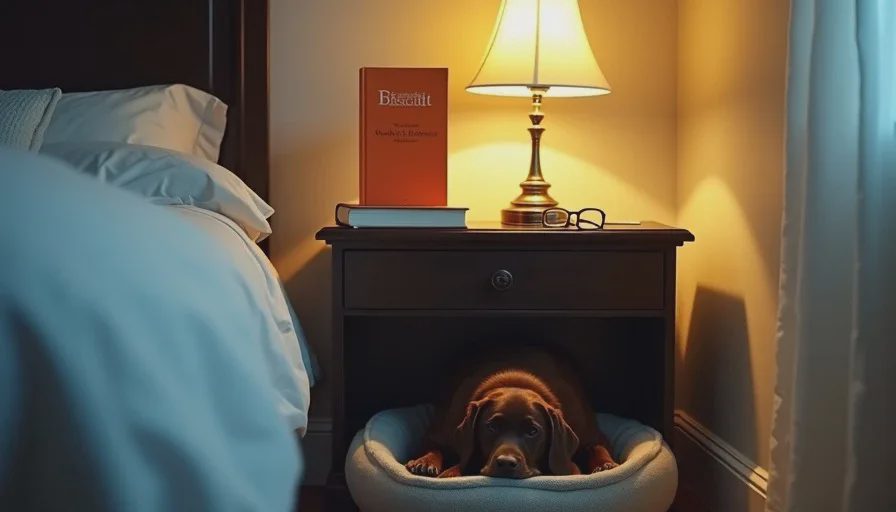
The best rescue dog books are not the ones that make you feel like you need to be a professional. They're the ones that make you feel like you can handle this. The book that sits on my nightstand now is not the thickest one I own. It's the one I've read four times, because every time I read it, I learn something new about the dogs I share my life with.
A Final Note for the Tired New Adopter
If you're in the middle of your first week, and the dog is hiding, and you're wondering if you made a mistake, I want you to know: the books help, but they're not magic. You don't have to read all of them tonight. You don't even have to read one. You just have to show up again tomorrow, feed the dog, sit quietly, and let time do what time does.
But if you want company in those quiet moments, one of these books will do just fine. They're not written for perfect people. They're written for people who are trying. And that's the only kind of person a rescue dog needs.
Every good dog was once someone's "too much."
And every good adopter starts with a book, a dog, and a little bit of hope that they can figure this out.



No notes yet — write the first one.