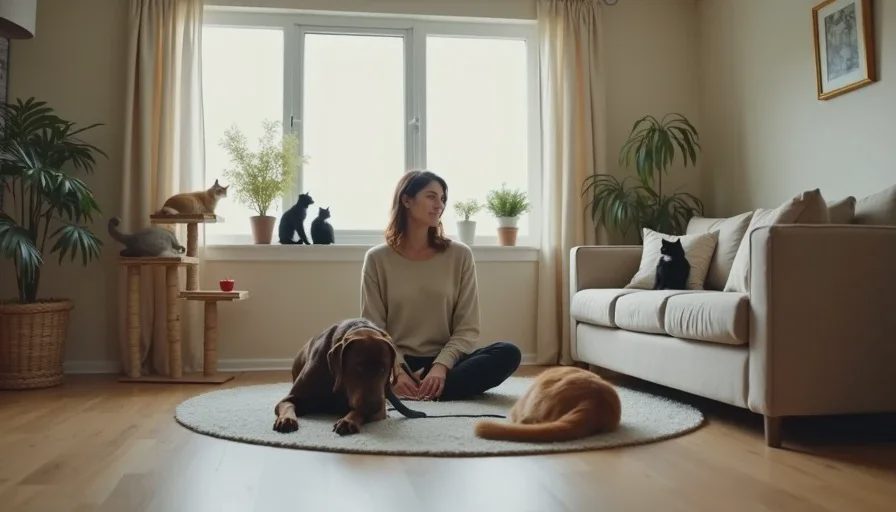
When people hear that I have four dogs and three cats, their first question is usually, "How do they all get along?" The honest answer is: because I never let them meet all at once. Introducing a new dog to resident dogs—and especially introducing a rescue dog to cats—is not a single event. It's a weeks-long process that rewards patience and punishes shortcuts. I've brought more than thirty animals through this house, and I've learned that the only reliable way to avoid a brawl is to go slowly enough that nobody feels like they have to fight for anything.
The biggest mistake I see new adopters make is putting the new dog and the resident pets in the same room on day one, hoping they'll "sort it out." They won't sort it out. They'll create a hierarchy based on fear, and you'll spend months undoing the damage. The method I use now is boring, deliberate, and built around one rule: every animal gets to feel safe before they have to share space.
Why Slow Is Fast in a Multi-Pet Household
A new rescue dog is coming out of a shelter or a transport run with a nervous system that's already overloaded. Your resident dogs and cats have an established territory and social structure. If you shove them together too quickly, you're not introducing them—you're throwing a stranger into a family dinner and hoping nobody argues. That's not realistic.
The goal of rescue dog introductions isn't instant friendship. It's neutrality. If the new dog can ignore the cats, and the resident dogs can sniff without stiffening, that's a win. Friendship may come later, or it may not. But peaceful coexistence is enough.
Step One: The Quarantine Room
Every new animal starts in a separate room with a solid door. For dogs, I use the guest room or my office. For cats, I use the bathroom or a spare bedroom. This isn't punishment. It's decompression, and it also serves a practical purpose: scent is the first language of your household, and the new animal needs to become part of that language before anyone meets face-to-face.
The new dog stays in that room for at least a week, often longer. They have a crate, a bed, water, and meals. I go in and sit with them, but I don't force interaction. Meanwhile, the resident animals can hear and smell them through the gap under the door. That alone starts the introduction without any direct contact.
Step Two: Scent Swapping Before Face Time
After a few days, I start the scent swap. I rub a soft cloth on the new dog's cheeks, chest, and behind the ears, then leave that cloth in the living room where the resident dogs and cats can investigate it. I do the reverse too—rub cloths on each resident animal and put them in the new dog's room. This lets everyone learn each other's smell before they ever see each other.

I pay close attention to how the resident animals react to the cloth. Do they sniff it and walk away? That's good. Do they growl, hiss, or try to attack the cloth? Then we're not ready for visual contact yet. Some animals just need more time to process the new smell.
Step Three: The Baby Gate Meeting
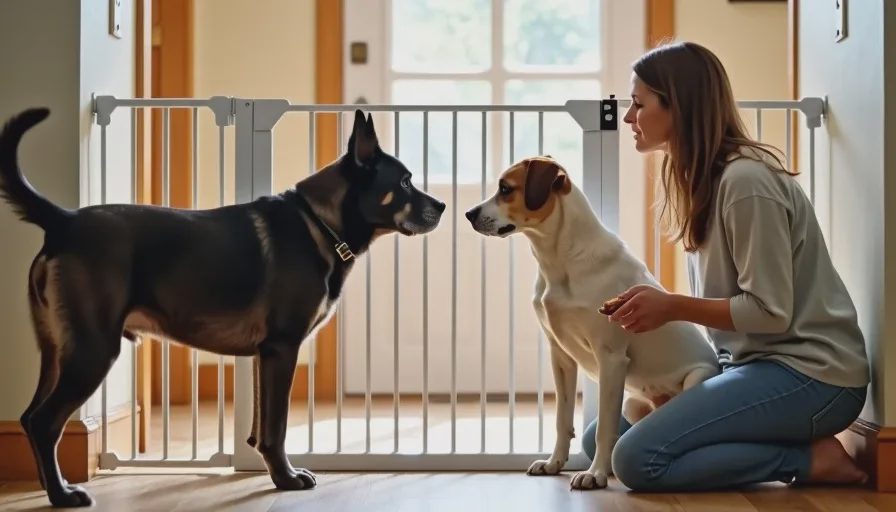
The baby gate is the single most useful tool in a multi-pet home. Once the new dog is comfortable in their quarantine room and the resident pets have stopped reacting strongly to the scent, I set up a tall baby gate in the doorway. The new dog stays on one side, the resident dogs on the other. The cats are kept in a separate room during the first few of these sessions, because they add too many variables at once.
I keep these first visual meetings short—five to ten minutes. Nobody crosses the gate. Nobody gets leashed and dragged closer. The dogs can see each other, sniff at the gap, and then retreat. I toss treats on both sides of the gate so everyone learns that good things happen when the other dog is around.
Signs You're Moving Too Fast
If either dog barks frantically, lunges at the gate, or stiffens with a hard stare and raised hackles, we end the session. That's not a failure. It's information. The dogs are telling me they need more time with scent alone. I'd rather spend an extra week at the scent-swap stage than rush into a face-to-face meeting that sets everyone back.
Step Four: Same-Room Time, No Cats Yet
When the gate sessions are calm—both dogs can look at each other and look away, or sniff and then disengage—I allow the new dog into the main living area with the resident dogs, one dog at a time first, then all together. The new dog stays on a light drag line so I can guide them without grabbing. I don't force greetings. Parallel walking in the backyard is my favorite first activity, because it gives the dogs something to do besides stare at each other.
The cats stay behind a closed door during this stage. I've learned the hard way that introducing a dog to cats too early can create a chase-and-hide dynamic that's difficult to break. The cats are introduced later, once the new dog has settled into the dog pack.
Step Five: Introducing the Cats
Introducing a rescue dog to cats is the part where most multi-pet adoptions go sideways, because dogs and cats speak very different body languages. A dog's play bow can look like an attack to a cat. A cat's hiss can trigger a dog's prey drive. I never let a new dog meet the cats without a barrier between them for at least the first several exposures.
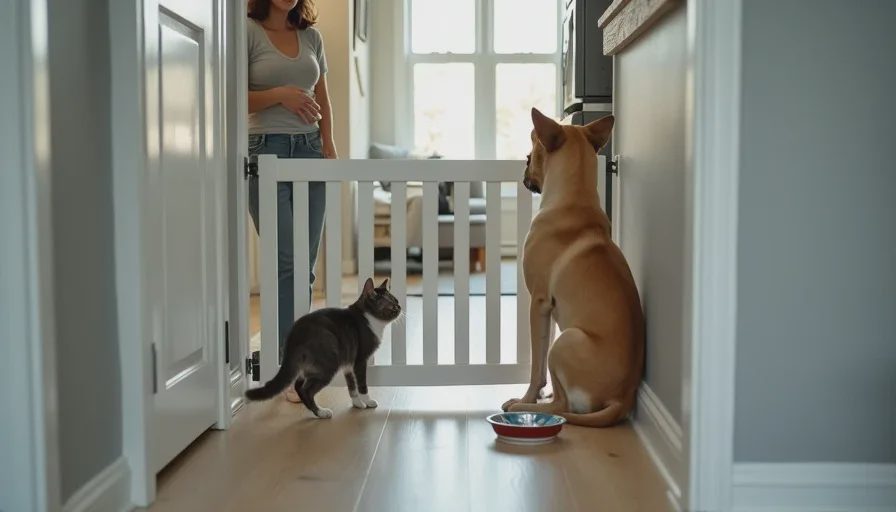
I start with the new dog on a leash behind a baby gate, and the cats free to approach or leave as they choose. The cats almost always choose to leave at first, and that's fine. The goal is for the dog to see a cat and remain calm, not to force an interaction. Treats rain from the sky whenever the dog looks at a cat and then looks back at me. That's the behavior I want: cat is present, dog disengages.
When to Slow Down with Cats
If the dog freezes, whines, trembles, or tries to push through the gate, we back up. Some dogs have high prey drive and may never be safe with cats. I've had to place a foster in a cat-free home because his reaction was too intense to manage safely. That's not a moral failing—it's responsible placement. Not every dog can live with cats, and pretending otherwise puts everyone at risk.
The Mistakes I Still Kick Myself Over
I've made plenty of them. Once, I let a new foster meet the entire resident pack in the backyard on his second day, thinking the neutral space would help. It didn't. He got overwhelmed, snapped at one of my dogs, and we spent the next three weeks undoing the tension. Another time, I assumed a cat would be fine because she'd lived with dogs before. She wasn't fine, and she spent a month on top of the refrigerator.
The lesson in all of this: rescue dog introductions are not a test of your leadership. They're an exercise in observation. You're watching for stress signals—lip licking, yawning, whale eye, tucked tails, raised hackles—and adjusting the pace accordingly. The animals will tell you what they need. You just have to listen.
The Payoff: A House That Works
The first time you see the new dog asleep on the couch while a cat walks past without a flicker of interest, you'll know the slow method was worth it. It won't happen overnight. For some animals, it takes months. But when it works, you get what I have: a house full of animals who don't necessarily love each other, but who've learned to share space without drama.
That's the real goal. Not a pack of best friends. Just a household where everyone can relax.
Every good dog was once someone's "too much."
And every peaceful multi-pet home started with a week behind a closed door.



No notes yet — write the first one.