
When I filled out my first adoption application twelve years ago, I was sure I was doing it wrong. I reread every line three times, debated whether "apartment with a small patio" sounded too cramped, and ended up writing a personal statement that was half apology. Then I got approved anyway, because the volunteer reading it wasn't looking for perfection. She was looking for honesty. Now, after years on the other side of the desk, I can tell you that reading an adoption application is less about screening people out and more about matching them well. So if you're about to fill one out, let me give you the dog adoption application tips I wish someone had given me back then.
Every shelter and rescue has its own form, but the people reading them are looking for the same basic things. We're not trying to catch you in a lie. We're trying to imagine what your life looks like and whether it can hold a dog. The application is not a test. It's the beginning of a conversation.
What the Application Is Really Asking
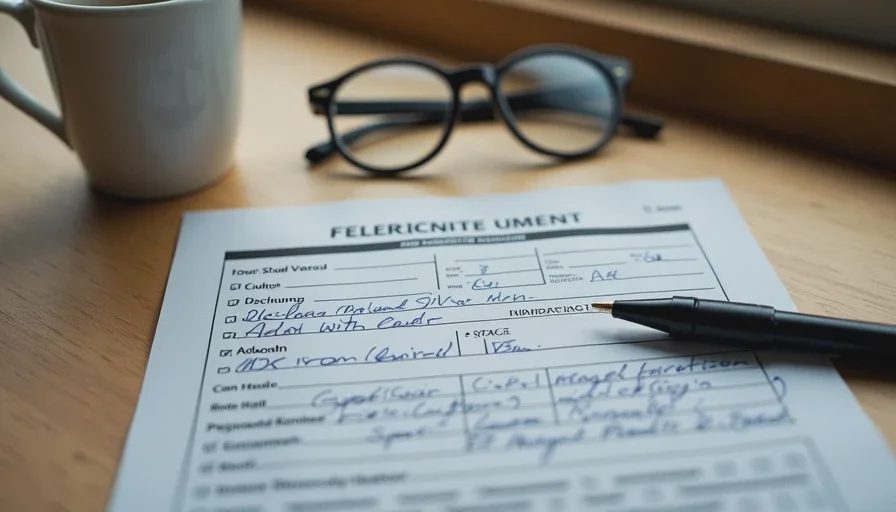
Most forms look like a list of questions about your housing, work hours, and experience. But underneath the boxes, every question is really asking one of three things: Can you keep a dog safe? Can you afford the basics? And are you thinking about this seriously, or just reacting to a cute face?
Housing and space
When I see "house with fenced yard," that's nice, but it's not the whole story. I've approved plenty of apartment dwellers who were more prepared than people with big backyards. What I'm actually looking for is whether you have permission to have a dog, whether your living situation is stable, and whether you have a plan for exercise and potty breaks. A fenced yard is a convenience, not a requirement. A person in an apartment who walks twice a day is a better fit for many dogs than a person with a yard who never goes outside.
Work schedule and time alone
The question about how many hours the dog will be alone makes people nervous. They think the "right" answer is zero. It's not. Most of us work. The real question is what happens during those hours. Do you have a dog walker? A lunch break routine? A plan for a puppy who can't hold it eight hours? A person who says "I work eight hours but my partner comes home at three" is more reassuring than someone who writes "I'm home all day" and leaves it at that. We can tell when an answer is real and when it's a guess.
Current and past pets
This section matters more than people think. If you've had a dog before and it lived to a good old age, that tells me you know what commitment means. If you rehomed a dog, I don't automatically disqualify you—I want to know what happened and what you learned. Leaving this section blank or writing "N/A" when you clearly have other animals is a red flag. It makes us wonder what else you're not mentioning.
The personal statement
This is where most people freeze. They write things like "I've always wanted a dog" or "I promise to love it forever." That's sweet, but it doesn't tell me anything about your actual plan. The best personal statements I've read are specific: "I'm looking for a lower-energy dog who can be alone during my four-hour morning shifts. I've budgeted for training classes and have a vet lined up." That's not cold. That's prepared.
What Volunteers Are Scanning For
When I pick up an application, I read it the way I'd read an email from a friend who's trying to tell me something important. I'm not circling mistakes. I'm looking for signals.
Signs of thoughtfulness
An application that mentions a specific dog by name, or references something from the dog's listing, tells me the person has actually read about the animal. They're not just collecting dogs. That attention matters because it suggests they'll keep paying attention after the adoption.
Realism about challenges
A sentence like "I know rescue dogs can take time to settle, and I'm ready for that" doesn't impress me by itself. What impresses me is when someone describes what that readiness looks like: "I've saved up for a trainer," or "I've talked to my landlord about a second dog." Plans are better than promises.
Consistency across the form
If you write in one section that you have no other pets, and then in another section mention your cat, that's not a lie—it's a mistake. But it makes me pause. I'll likely call you to clarify, and that's fine. But a quick read-through before you submit prevents that pause from happening in the first place.
The Mistakes That Make Applications Easy to Pass Over
I've seen a lot of applications, and most of them are perfectly fine. The ones that get passed over usually share a few common problems.
Leaving questions blank
Blank answers force the volunteer to guess. And when we have ten applications to review, a blank answer often means we move to the next one. It's not that we don't care. It's that we're tired, and the person who answered every question made our job easier. If a question doesn't apply to you, write "N/A" or a short explanation. That alone puts you ahead.
Writing a novel in the personal statement
A four-page essay about your childhood dog is lovely, but I don't have time to read it carefully. Keep the statement focused. Three or four sentences that answer the basic questions—what kind of dog you're looking for, what your daily life looks like, and why adoption feels right to you—is plenty.
Over-apologizing
Some applicants write like they're preparing to be rejected: "I know my apartment is small, I know I work too much, I know I'm not perfect, but..." That energy doesn't help. I'm not looking for an apology. I'm looking for a plan. Tell me about your small apartment and the three daily walks you've mapped out. That's more convincing than any confession.
The "I'm home all day" claim
I've learned to be skeptical of this answer because it's often written to look good rather than to be true. If you're home all day now but starting a new job next month, say so. The goal is to match a dog with your real life, not the life you think the volunteer wants to see.

How to Make Your Application Stand Out (In a Good Way)
The best applications are not the flashiest. They're the ones that make me think, "This person has thought this through."
Be specific about your daily routine
Instead of "I like to walk," write "I walk 30 minutes every morning and have a dog walker on Tuesdays and Thursdays." Instead of "I have a yard," write "My yard is fenced on three sides, and I plan to add a gate before bringing a dog home." The details tell me you're already living the life, not just imagining it.
Mention the difficult parts honestly
If you have a busy season at work, say so. If you're pregnant or planning to move, mention it. Volunteers appreciate honesty more than perfection. It gives us something to work with. And it means the dog will be placed in a home where the humans are prepared for reality, not surprised by it.
Reference the specific dog
If the application asks which dog you're interested in, name them. Write one sentence about why. A person who says "I saw Biscuit's photo and noticed he likes slow walks, which is exactly my pace" is a person I want to meet. They've already started paying attention to the actual animal, not just the idea of one.
Ask a question
A good application sometimes ends with a question: "Would Biscuit do okay in a home with a cat, or should I focus on a different dog?" That tells me you're already thinking about fit. It's a small thing that makes a big impression.
A Note for Nervous First-Time Applicants
If you're sitting at your kitchen table right now, staring at the form and convinced you're not good enough, I want you to hear this: the people reading your application want you to be good enough. We're not looking for reasons to reject you. We're looking for reasons to say yes. A slightly imperfect home with a prepared, honest person is better than a perfect home with someone who won't ask questions.
My first application said, "I live in a small house with no yard, and I work long shifts, but I will walk the dog every evening and I won't give up." That was it. No polish, no perfection. And it was enough, because it was true.
Reading an adoption application has taught me that the best applicants are not the ones with the most impressive answers. They're the ones who tell the truth and show they've thought beyond the first day. So be specific, be honest, and don't apologize for being real. The dog doesn't need a perfect human. It needs a prepared one.
Every good dog was once someone's "too much."
And every good adoption starts with an application that sounds like a real person wrote it.
No notes yet — write the first one.